
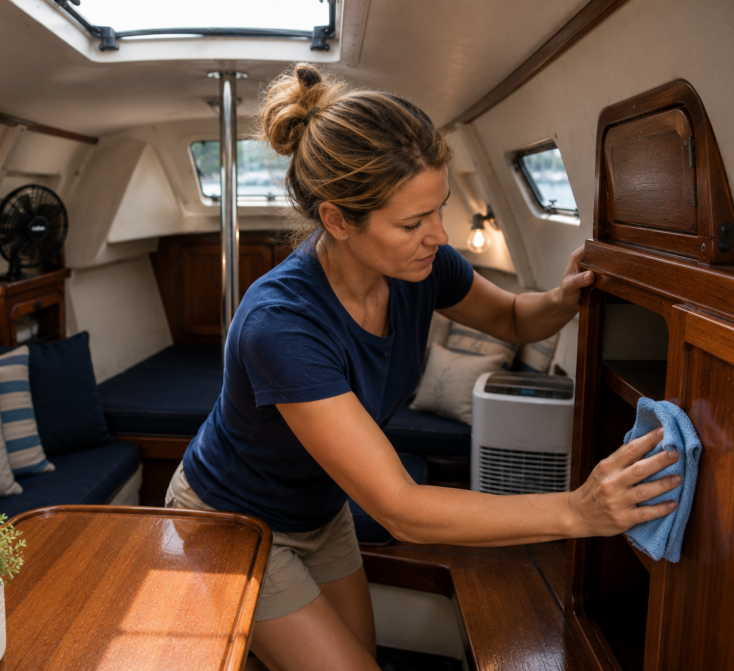
How to Remove Moldy Smells From Boat Cabins: A Maryland Boater's Complete Guide
Nothing ruins a day on the water faster than opening your boat cabin and being greeted by a strong musty smell.
Many Maryland boat owners spend hours cleaning their vessel only to discover that the odor keeps returning. The cushions look clean. The carpet appears dry. The cabin is spotless.
Yet the smell persists.
The reason is simple:
Most moldy boat odors are not surface problems.
They're moisture problems.
And Maryland's Chesapeake Bay environment creates some of the most favorable conditions for those odors to develop.
Also Read ⛵Why Boats Develop Musty Odors So Quickly: The Complete Chesapeake Bay Boat Owner’s Guide
Also Read ⛵Maryland’s 10 Worst Smells (And How Pros Remove Them)
Why Boat Cabins Develop Moldy Smells
Unlike homes, boats experience constant exposure to:
- Humidity
- Condensation
- Water intrusion
- Limited airflow
- Wet equipment
- Temperature swings
When moisture becomes trapped inside the cabin, mold, mildew, and bacteria begin feeding on organic materials.
Over time, these organisms release compounds known as Microbial Volatile Organic Compounds (MVOCs).
These gases create the familiar:
- Musty smell
- Damp smell
- Mildew odor
- "Old boat" smell
Most boat owners notice the odor long before they ever see visible mold.
⛵Mold Testing & Removal
Why Air Fresheners Don't Solve Boat Odors
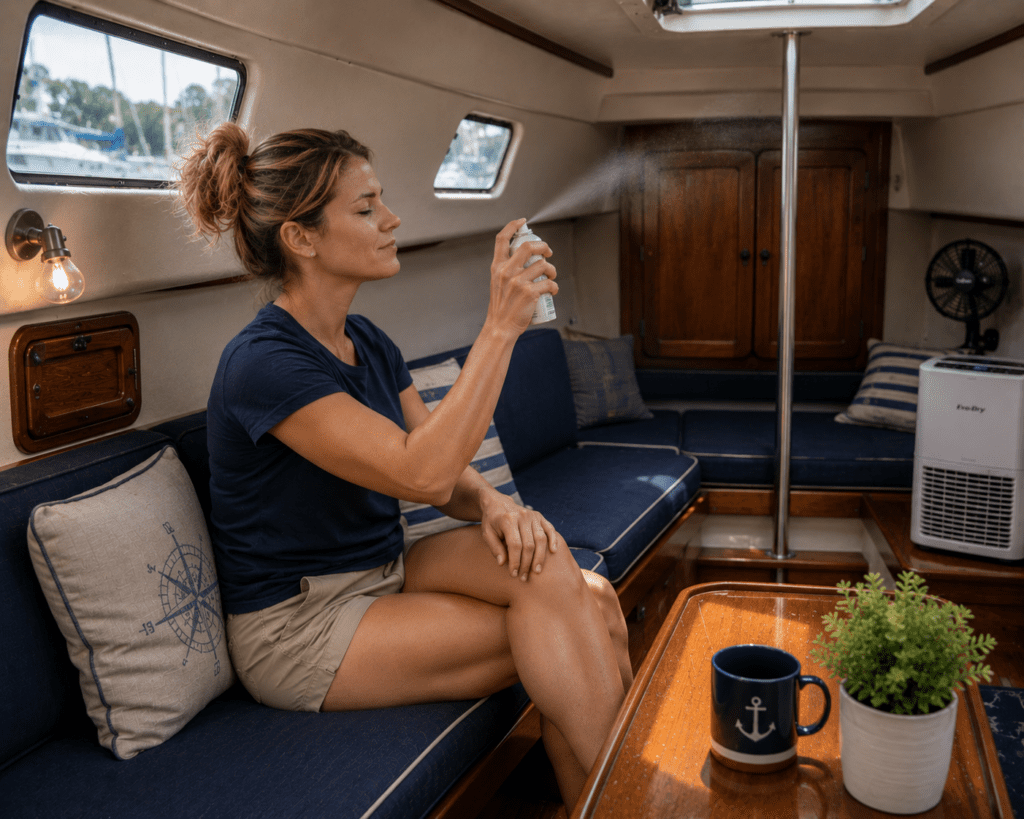
When a moldy smell develops inside a boat cabin, many owners naturally reach for the quickest solution available.
Common products include:
- Air fresheners
- Odor bombs
- Scented sprays
- Fragrance dispensers
- Essential oil diffusers
- Deodorizing gels
- Fabric refresher sprays
While these products may temporarily improve the smell, they rarely address the underlying problem.
In most cases, they simply cover the odor with a stronger fragrance.
The cabin may smell like citrus, pine, ocean breeze, or fresh linen for a few hours or even a few days, but the mold, mildew, moisture, or bacterial contamination responsible for the odor is still present.
As the fragrance dissipates, the musty smell often returns.
A Moldy Smell Is Usually a Warning Sign
Many boat owners view musty odors as an inconvenience.
In reality, that smell is often an early warning signal.
The odor is typically being generated by:
- Active mold growth
- Mildew colonies
- Moisture-damaged materials
- Bacteria feeding on organic debris
- Contaminated insulation
- Wet carpeting
- Damp cushions
- Hidden water intrusion
The smell itself is not the problem.
The smell is evidence that a problem exists.
Ignoring the source while masking the odor is similar to placing an air freshener in a vehicle with a leaking engine. The symptom may be hidden temporarily, but the underlying issue continues to worsen.
Why Boat Cabins Are Especially Vulnerable
Boats present unique odor challenges because they combine three conditions that mold and mildew love:
Moisture
Humidity, condensation, rain intrusion, and water exposure constantly introduce moisture into the vessel.
Limited Airflow
Many boats remain closed for extended periods between trips, allowing humid air to become trapped inside the cabin.
Organic Materials
Cushions, carpeting, wood surfaces, fabrics, and stored gear provide food sources for microbial growth.
Together, these conditions create an ideal environment for recurring odors.
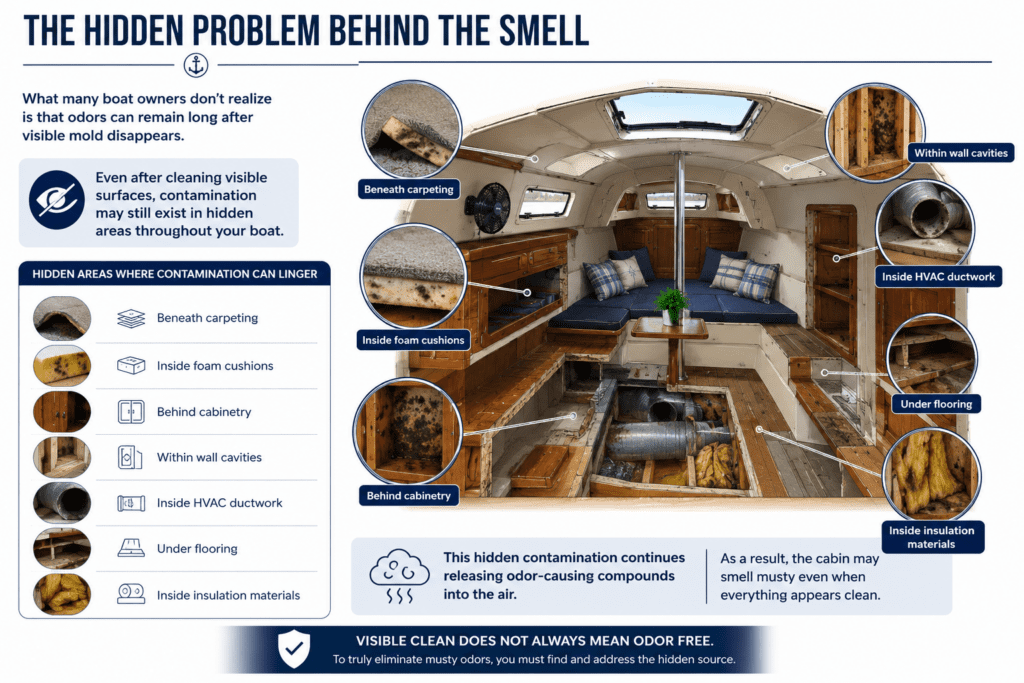
Why Odor Bombs Often Fail
Odor bombs and fogging products are popular because they seem easy.
Simply activate the product, close the cabin, and allow the fragrance to circulate.
Unfortunately, most consumer odor bombs:
- Do not remove moisture
- Do not eliminate mold
- Do not kill established microbial colonies
- Do not repair leaks
- Do not remove contaminated materials
Instead, they temporarily overwhelm the odor with fragrance.
The result is often a cabin that smells like both mildew and perfume at the same time.
True Odor Removal Requires Source Removal
The only reliable way to permanently remove mold-related boat odors is to identify and eliminate the source.
This typically involves:
✔ Correcting moisture intrusion
✔ Repairing leaks
✔ Drying contaminated materials
✔ Cleaning affected surfaces
✔ Improving ventilation
✔ Reducing humidity levels
✔ Removing heavily contaminated materials when necessary
Once the source is addressed, the odor naturally diminishes because the organisms producing the smell can no longer thrive.
The Bottom Line
A moldy smell is usually not the problem itself.
It's a symptom of moisture, mold, mildew, or contamination somewhere inside the boat.
While air fresheners and scented products may provide temporary relief, lasting odor removal requires finding and correcting the underlying cause.
For Maryland boat owners navigating the humid conditions of the Chesapeake Bay, moisture control remains the single most effective strategy for preventing odors from returning season after season.
Also Read ⛵Scent vs. Odor: Why Candles and Air Fresheners Make Smells Worse
How to Remove Moldy Odors From a Boat Cabin
One of the biggest mistakes boat owners make is treating a moldy odor as a cleaning problem when it's actually a moisture problem.
The odor you smell is often only a symptom of a deeper issue developing somewhere inside the vessel. If the source of moisture remains, mold, mildew, and odor-producing bacteria will continue to return no matter how many cleaning products are used.
The key is to approach odor removal systematically.
Step 1: Find the Source of Moisture
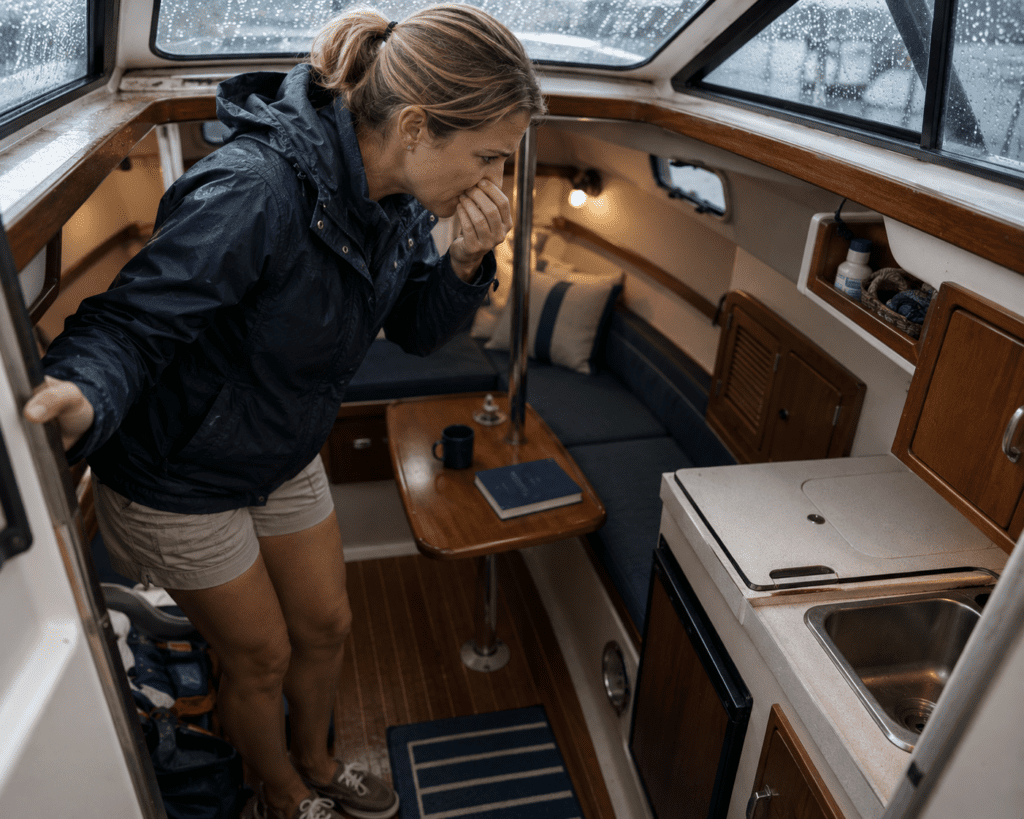
Before attempting any odor removal, determine where moisture is entering or accumulating inside the boat.
Moisture is the fuel that allows mold and mildew to thrive.
Common inspection areas include:
- Windows and portholes
- Hatches and hatch seals
- Deck fittings
- Cabin doors
- Storage lockers
- Bilge compartments
- Air conditioning systems
- Plumbing connections
- Water tanks
- Anchor lockers
Look for:
- Condensation
- Water stains
- Damp surfaces
- Discolored materials
- Soft wood
- Rust or corrosion
- Persistent humidity
Many boat owners are surprised to discover that a small leak around a hatch or window can create enough moisture to produce a cabin-wide odor problem.
Remember: Until the moisture source is corrected, the odor source remains active.
Also Read ⛵Top Causes for Household Odors & How to Address Them
Step 2: Remove and Dry Damp Materials
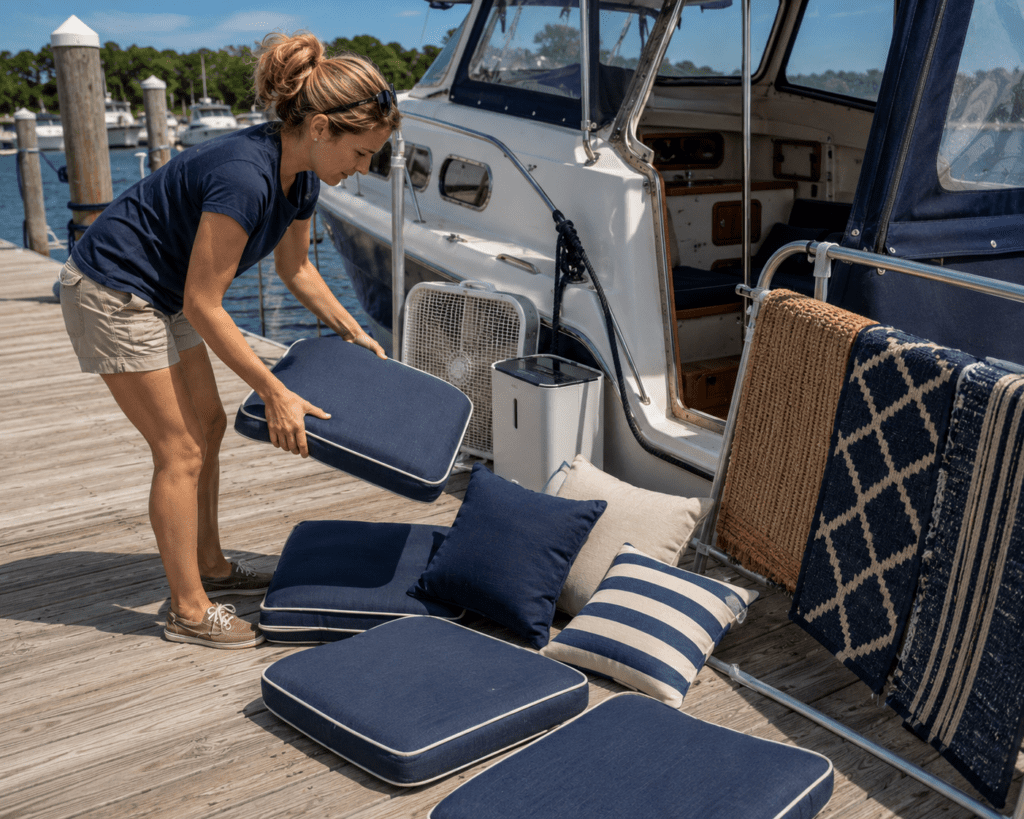
Soft materials often act like giant sponges inside a boat cabin.
Items commonly affected include:
- Seat cushions
- V-berth mattresses
- Bedding
- Towels
- Life jackets
- Canvas covers
- Curtains
- Throw rugs
Remove these items from the boat whenever possible and inspect them individually.
Even if they feel dry on the surface, trapped moisture may exist deep within the material.
Allow items to dry completely in:
- Direct sunlight
- Well-ventilated areas
- Low-humidity environments
Sunlight offers additional benefits because ultraviolet (UV) exposure can help inhibit microbial growth and reduce moisture retention.
If materials continue to smell musty after drying, deeper contamination may be present.
Also Read ⛵Hidden Science of Odor Removal in Maryland | Maryland OdorPros
Step 3: Improve Cabin Ventilation

Poor airflow is one of the biggest contributors to mold and mildew development.
When a boat remains closed for extended periods, humid air becomes trapped inside the cabin.
This creates ideal conditions for:
- Mold growth
- Mildew growth
- Condensation
- Odor development
Improving airflow helps remove excess moisture before it can become a problem.
Recommended strategies include:
Open Hatches and Ports
Whenever weather permits, increase natural airflow throughout the cabin.
Use Ventilation Fans
Marine-grade fans help move air into areas where moisture tends to accumulate.
Install Solar-Powered Vents
Solar vents provide continuous airflow even when the vessel is unattended.
Run a Marine Dehumidifier
A quality dehumidifier can dramatically reduce moisture levels during storage periods.
Promote Cross-Ventilation
Air should enter from one location and exit through another whenever possible.
The goal is simple:
Keep humid air moving before it becomes trapped inside the vessel.
Also Read ⛵Indoor Air Quality & Odor: Health Risks of Lingering Smells
Step 4: Clean Problem Areas Thoroughly
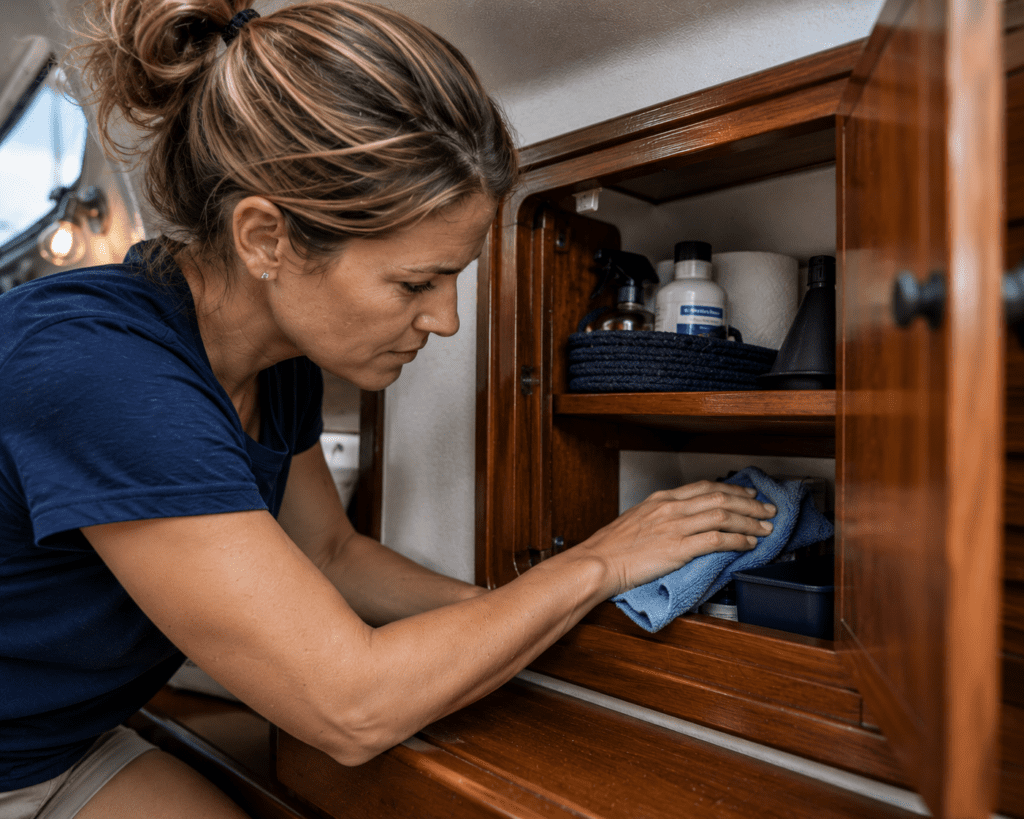
Once moisture issues have been identified and corrected, cleaning can begin.
Focus on areas where mold, mildew, and organic debris commonly accumulate.
Pay special attention to:
- Under seat cushions
- Behind cushions
- Storage lockers
- Cabinet interiors
- Bilges
- HVAC vents
- Air return grills
- Carpet edges
- Corners and seams
- Hidden compartments
These locations often harbor contamination long after visible surfaces appear clean.
Many boat owners only clean areas that are easily visible, leaving hidden contamination untouched.
As a result, odors frequently return within days or weeks.
A thorough cleaning should remove:
- Organic debris
- Dust accumulation
- Surface mildew
- Moisture-retaining residues
The cleaner and drier these areas remain, the less opportunity mold and mildew have to return.
Also Read ⛵Why Your New Home Still Smells After Cleaning (And What It Means)
Step 5: Monitor the Cabin for Returning Odors
After cleaning, continue monitoring the cabin over the following weeks.
Pay attention to:
- Odors after rainstorms
- Odors after periods of storage
- Odors when the HVAC system starts
- New signs of condensation
- Areas that remain damp
If the smell returns quickly, the contamination source may still be active or hidden deeper within the boat's structure.
This is often the point where professional odor assessment becomes valuable.
⛵Contact Us
Real-World Chesapeake Bay Scenario
Imagine a sailboat docked in Annapolis during July.
After several weeks of hot temperatures and afternoon thunderstorms:
- Humidity rises
- Cabin airflow decreases
- Cushions absorb moisture
- Condensation develops overnight
The owner returns after a few weeks away and immediately notices a musty smell.
This situation is incredibly common throughout:
- Annapolis
- Kent Island
- Rock Hall
- Severna Park
- Chesapeake Beach
- Ocean City
- Baltimore
Why Maryland Boat Owners Choose Professional Odor Removal

Maryland's humid climate creates unique challenges for boat owners.
Professional odor removal can help restore:
- Cabin comfort
- Air quality
- Interior freshness
- Overall boating enjoyment
while reducing the likelihood of recurring odor issues.
What To Do Next...
Moldy boat cabin odors rarely disappear on their own.
In most cases, the odor is signaling hidden moisture, microbial growth, or contamination that needs attention.
The sooner these issues are identified and corrected, the easier it becomes to restore a clean, fresh-smelling cabin.
For Maryland boat owners navigating the unique humidity challenges of the Chesapeake Bay, proactive moisture management remains the best defense against persistent odors.
When DIY efforts fail, professional odor elimination can help identify and address the problem at its source.

🏡Home
Got More Questions?
1. Why does my boat cabin smell moldy even when it looks clean?
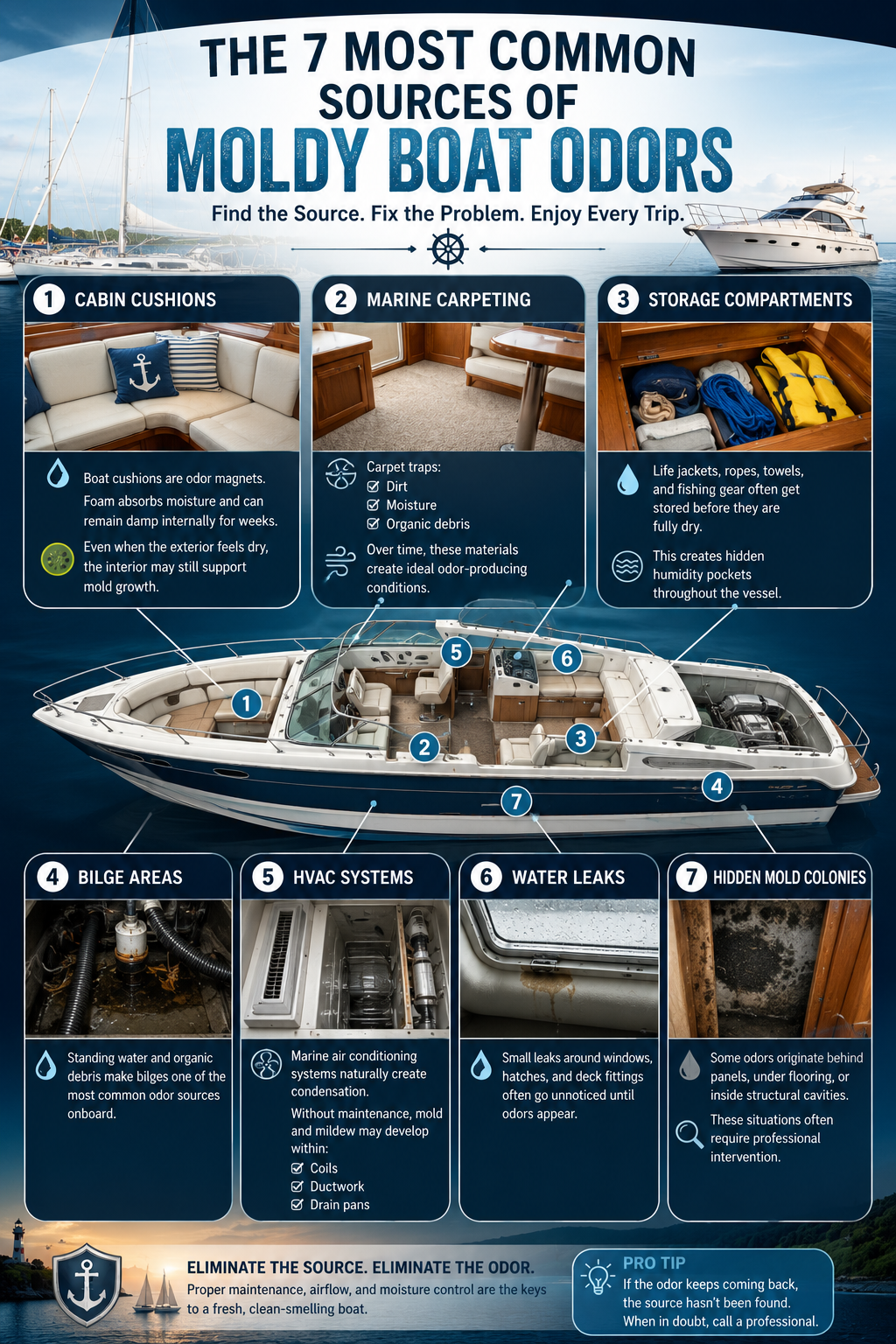
A boat cabin can smell moldy even when visible surfaces appear clean because mold, mildew, and moisture often develop in hidden areas such as cushions, carpet padding, storage lockers, bilges, HVAC systems, and behind panels. The odor is frequently caused by contamination you cannot easily see.
2. What causes a musty smell inside a boat cabin?
Musty odors are typically caused by excess moisture, humidity, mold, mildew, bacteria, or organic debris trapped inside the vessel. Maryland's Chesapeake Bay climate creates ideal conditions for these odors to develop, especially during warm and humid months.
3. How can I tell if the smell is mold or mildew?
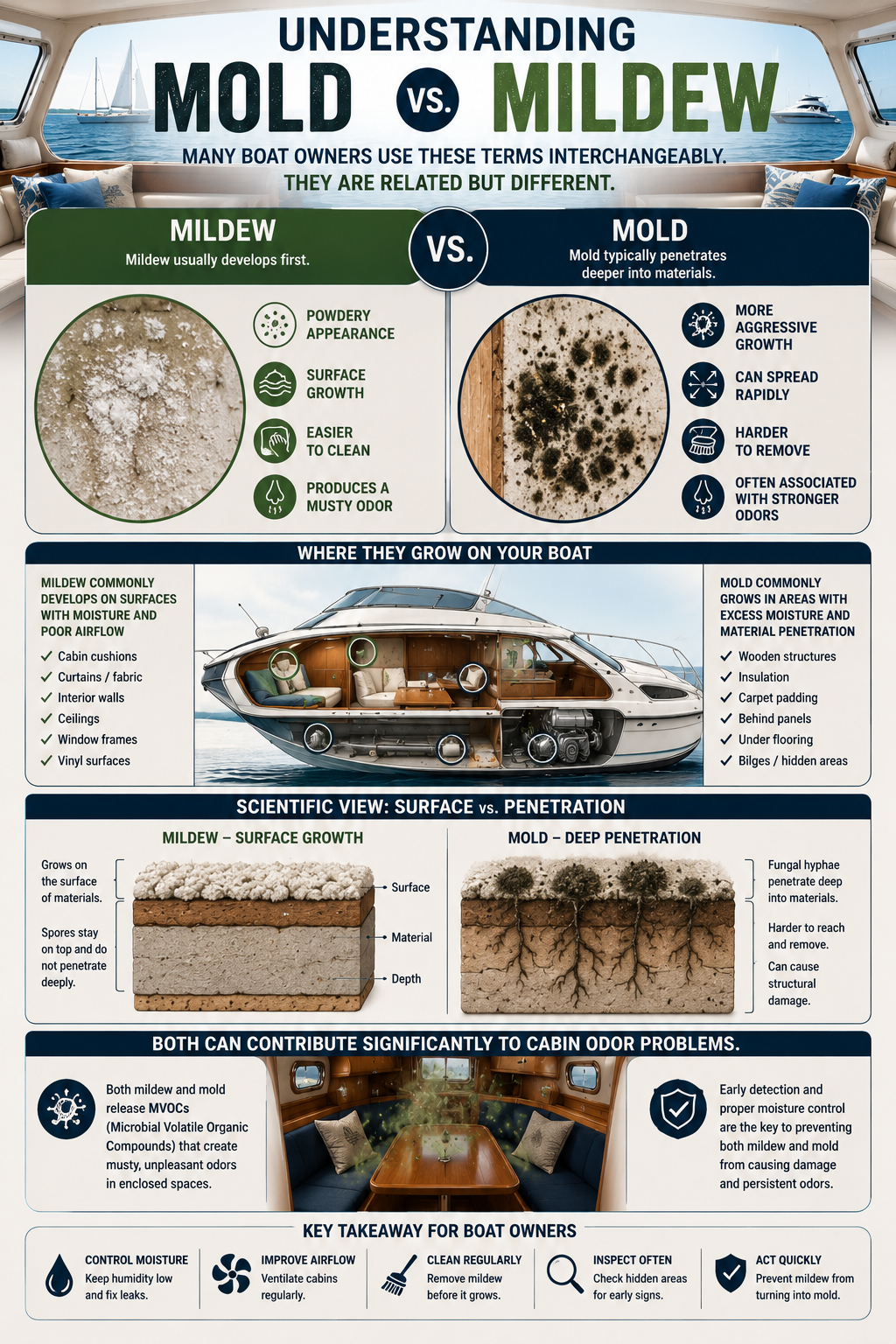
Mildew generally appears as a powdery surface growth and is usually easier to clean. Mold often penetrates deeper into materials, spreads more aggressively, and is associated with stronger odors. Both can contribute to persistent cabin smells.
4. Why does my boat smell worse after it rains?
Rain increases humidity levels and can introduce additional moisture through small leaks around hatches, windows, deck fittings, and seals. Even if no water is visibly entering the cabin, increased humidity can reactivate existing mold and mildew odors.
5. Can boat cushions hold mold and mildew odors?
Yes. Boat cushions are one of the most common odor sources because foam absorbs moisture and can remain damp internally for long periods. Even when the surface feels dry, hidden moisture inside the cushion may support mold growth and produce lingering odors.
6. Will air fresheners remove moldy boat odors?
No. Air fresheners may temporarily mask odors, but they do not eliminate the underlying cause. If mold, mildew, bacteria, or moisture remain present, the odor will continue to return until the source is addressed.
7. What is the best way to prevent moldy odors in a boat cabin?
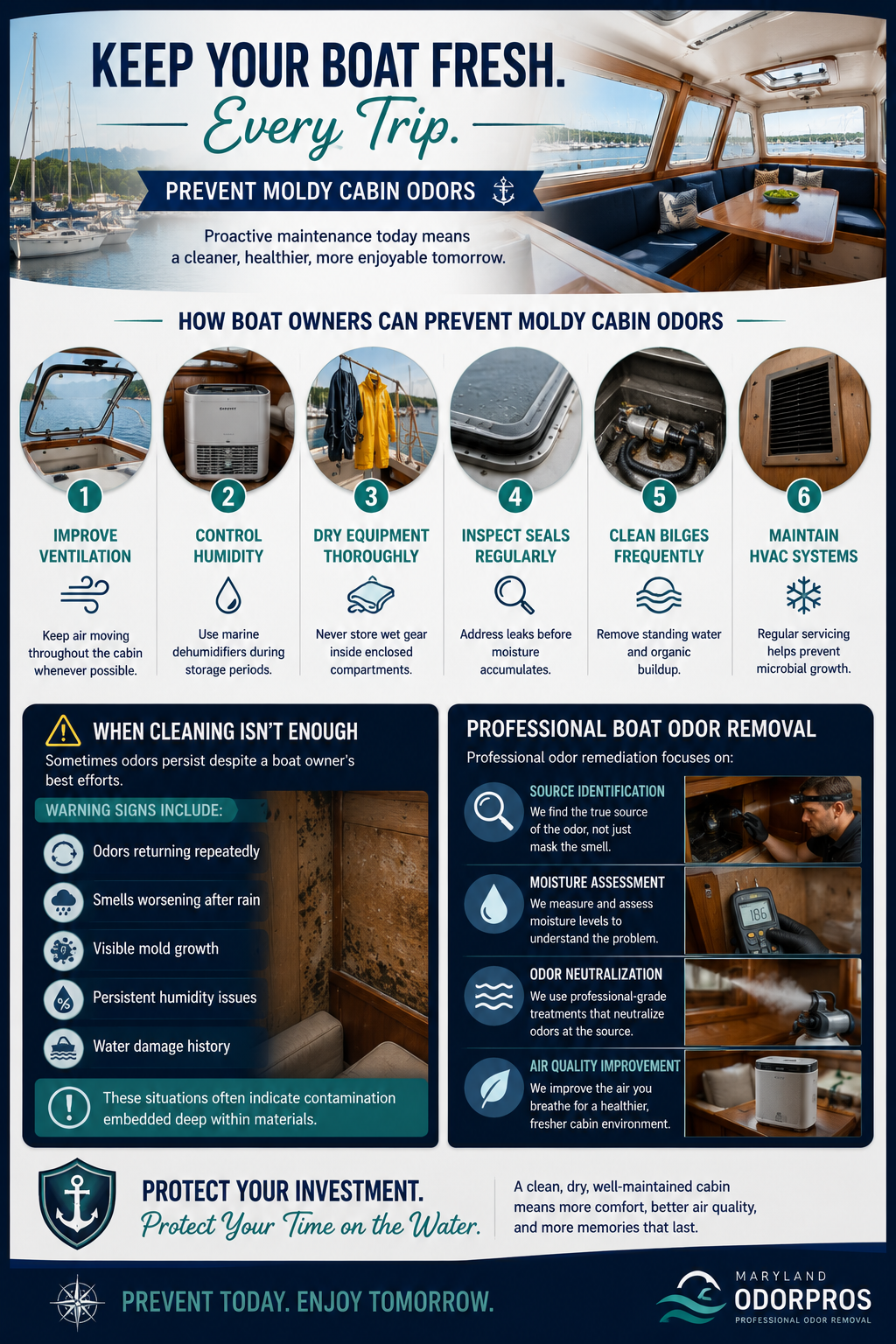
The most effective prevention methods include improving ventilation, controlling humidity, drying equipment thoroughly before storage, repairing leaks promptly, cleaning bilges regularly, and maintaining HVAC systems to reduce moisture buildup.
8. How often should I inspect my boat for moisture problems?
Boat owners should perform a thorough moisture inspection at least once per month during boating season and before long-term storage. Regular inspections help identify leaks, condensation, and humidity issues before they become serious odor problems.
9. Can a boat's air conditioning system cause musty odors?
Yes. Marine HVAC systems produce condensation during operation. Without regular maintenance, moisture can accumulate on coils, drain pans, and ductwork, creating an environment where mold and mildew can grow and circulate odors throughout the cabin.
10. When should I call a professional boat odor removal company?
Professional odor removal may be necessary if odors continue returning after cleaning, worsen during humid weather, are associated with visible mold growth, or appear linked to hidden moisture, water damage, or contamination embedded within structural materials. A professional assessment can identify the source and recommend appropriate remediation.