


The Real Problem with Household Odors
Most homeowners think odors are a cleaning issue. Wipe it down, spray something pleasant, and move on.
But here’s the reality:
If an odor keeps coming back, it was never removed—it was only covered up.
Odors are typically caused by microscopic organic compounds, bacteria, or chemical residues embedded in materials like drywall, flooring, fabrics, and HVAC systems. That’s why DIY solutions often fail—they don’t reach the source.
Let’s break down the most common odor sources—and what actually works.
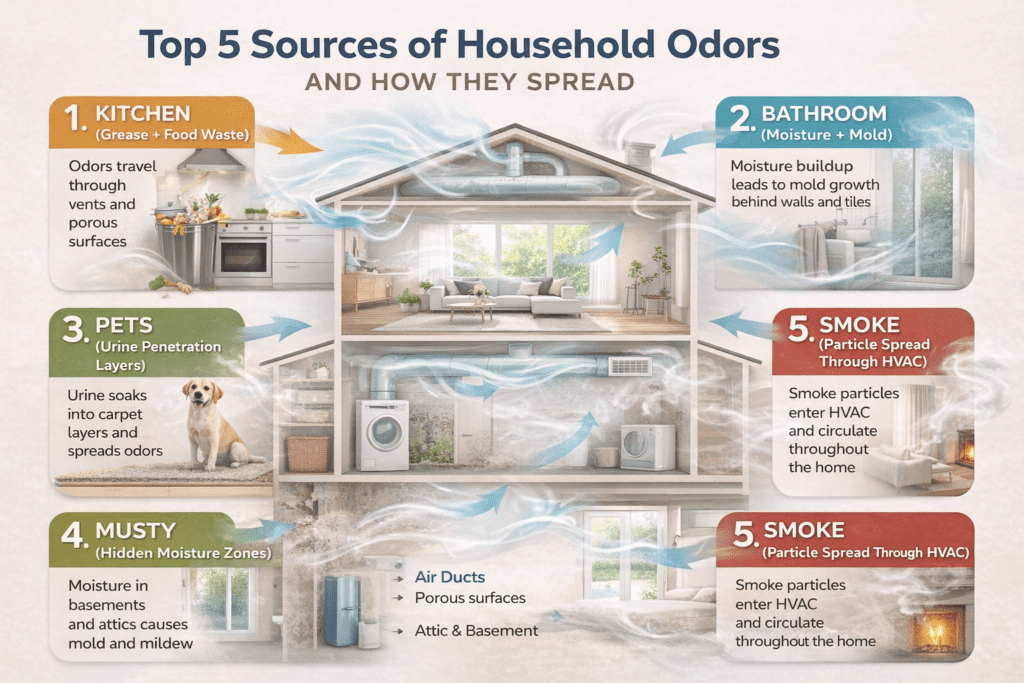
1. Kitchen Odors: More Than Just Trash
What’s Really Happening
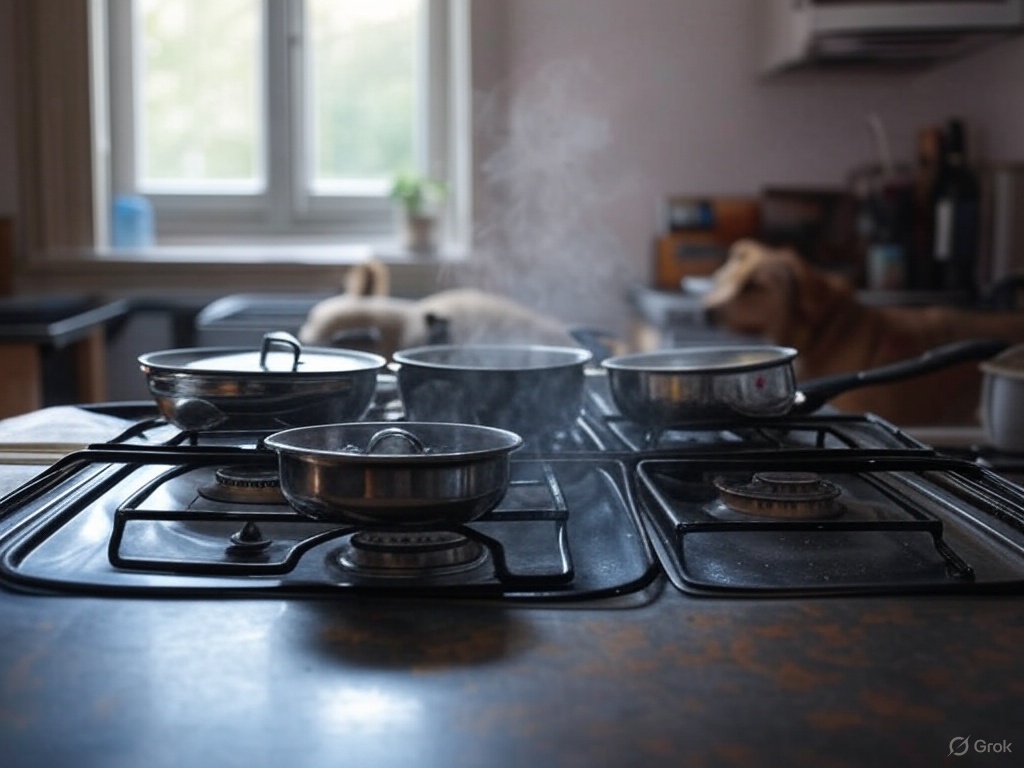
Kitchen odors aren’t just from yesterday’s garbage. They often come from:
- Grease buildup in cabinets and vents
- Food particles trapped in drains and disposals
- Organic residue inside appliances
- Bacteria thriving in hidden moisture zones
Over time, these compounds break down and release volatile organic compounds (VOCs)—the real source of lingering smells.
Why DIY Fails
Surface cleaning and air fresheners only treat the symptom. They don’t remove embedded residues inside porous materials or plumbing systems.
What Works
- Deep cleaning of grease and organic buildup
- Drain and disposal treatment at the microbial level
- Air treatment that neutralizes odor molecules—not just covers them
Also Read 📖Indoor Air Quality & Odor: Health Risks of Lingering Smells
2. Bathroom Odors: A Moisture-Driven Problem
What’s Really Happening
Bathrooms are ideal environments for:
- Mold and mildew growth
- Bacterial colonies in grout and caulking
- Moisture trapped behind walls and under flooring
Even if everything looks clean, odor-causing microbes may still be active behind surfaces.
Why It Matters Now
With rising awareness of indoor air quality, hidden moisture problems are becoming a major concern—especially in older homes and rental properties.
What Works
- Moisture control and ventilation improvement
- Removal of contaminated materials when necessary
- Professional treatment of microbial odor sources
3. Pet Odors: Deep Penetration, Not Surface Issues

What’s Really Happening
Pet urine and dander don’t stay on the surface. They:
- Soak into carpet padding and subfloors
- Absorb into baseboards and drywall
- Trigger bacterial breakdown that produces strong ammonia-like odors
Common Misconception
“If I clean the carpet, the odor should be gone.”
Unfortunately, if the contamination reached the subfloor, the smell will return—often worse over time.
What Works
- Source-level detection (not just visible areas)
- Removal or treatment of contaminated materials
- Vapor-based or molecular neutralization processes
Also Read 📖New Pet at Home? How to Prevent Odors Before They Start
4. Musty Smells: The Hidden Mold Indicator
What’s Really Happening
That “musty” smell is often your first warning sign of:
- Mold growth
- Excess humidity
- Water intrusion (past or present)
Even small leaks or seasonal humidity can create long-term odor problems.
Why It’s a Bigger Deal Than You Think
Musty odors don’t just affect comfort—they can impact:
- Property value
- Buyer confidence during home sales
- Tenant satisfaction in rentals
What Works
- Identifying and correcting moisture sources
- Treating affected materials—not just cleaning surfaces
- Whole-space deodorization to eliminate airborne compounds
5. Smoke Odors: One of the Hardest to Remove
What’s Really Happening
Smoke particles are extremely fine and invasive. They:
- Embed into walls, ceilings, and insulation
- Circulate through HVAC systems
- Bond to fabrics and porous materials
That’s why smoke odor can linger months or even years after the source is gone.
Common Mistakes
Opening windows or using air purifiers alone won’t solve the problem. Smoke residue remains embedded in materials.
What Works
- Deep surface and structural cleaning
- Air system treatment
- Professional odor neutralization targeting smoke compounds
Also Read 📖Basement Smells Like a Swamp? Mold, Musty & Sewage Odors Explained | Maryland OdorPros
Service-Business Scenario: When Odors Affect Property Value
A Maryland homeowner preparing to sell their home noticed a faint musty odor. Cleaning didn’t fix it.
During showings, buyers hesitated—even though the home looked spotless.
The issue?
Hidden moisture damage in the basement had created odor compounds circulating through the home.
After professional odor remediation:
- The odor was fully eliminated at the source
- Air quality improved noticeably
- The home sold faster with stronger buyer confidence
This is the difference between masking a problem and solving it.
Why Professional Odor Removal Matters
At a certain point, cleaning stops being effective—and remediation becomes necessary.
Professional odor removal focuses on:
- Identifying the true source (not just the smell)
- Treating air, surfaces, and materials simultaneously
- Neutralizing odor molecules at a chemical level
- Restoring indoor air quality—not just scent
Why This Matters More Today
Today’s homeowners, renters, and buyers are far more sensitive to:
- Indoor air quality
- Hidden contamination
- Property condition transparency
Odors are no longer seen as minor inconveniences—they’re red flags.
As expectations rise, properties with unresolved odor issues:
- Sit longer on the market
- Lose value
- Create tenant dissatisfaction
- Signal deeper problems
If You Can Smell It, It’s a Problem
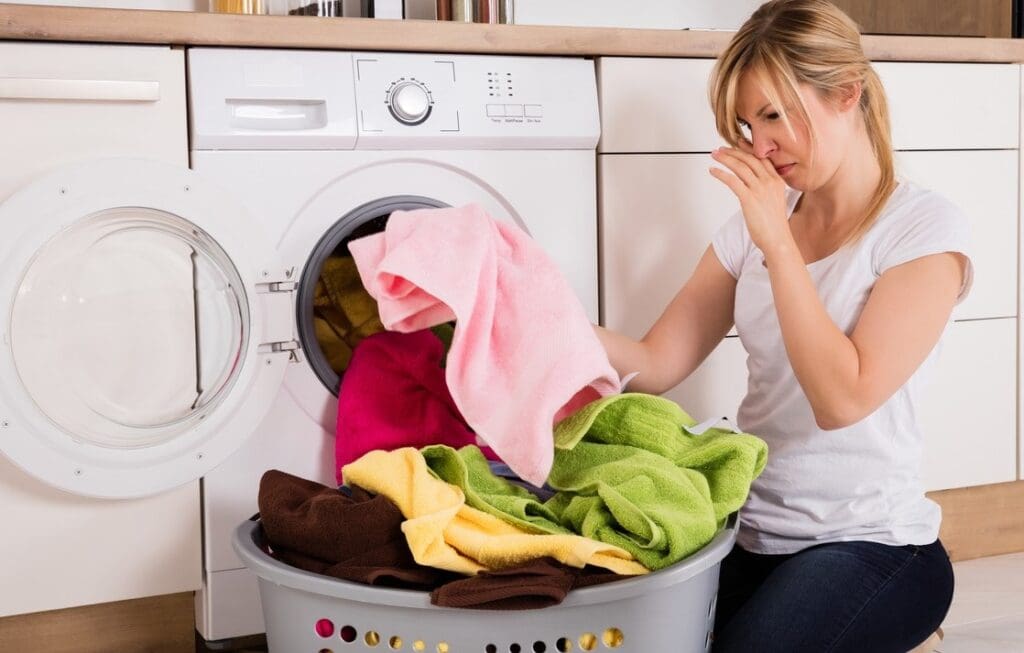
Odors don’t just happen—they’re a signal.
A signal that something is:
- Breaking down
- Growing
- Contaminating
- Or lingering beneath the surface
“If you can smell it, it’s a problem—and the only real solution is eliminating it at the source.”
Call to Action
If you’re dealing with persistent odors in your home, property, or vehicle, don’t settle for temporary fixes.
Maryland OdorPros specializes in true odor elimination—not masking.
We identify the source, neutralize the cause, and restore your space with confidence.
👉 Contact Maryland OdorPros today for a professional assessment and take the first step toward a cleaner, healthier indoor environment.


FAQs
1. What causes persistent odors in a home?
Persistent odors are typically caused by bacteria, mold, or chemical residues embedded in materials like carpet, drywall, and air systems—not just surface dirt.
2. Why do odors come back after cleaning?
Most cleaning only addresses surface contamination, leaving deeper odor sources untouched.
3. Are air fresheners effective for odor removal?
No. They temporarily mask odors but do not eliminate the underlying source.
4. How do professionals remove odors permanently?
By identifying the source and using specialized treatments that neutralize odor molecules at a chemical level.
5. Can pet odors be completely removed?
Yes, but only if contamination in subfloors and materials is properly treated or removed.
6. Is a musty smell always mold?
Often yes—it typically indicates excess moisture and potential microbial growth.
7. How long does smoke odor last in a house?
Without proper treatment, smoke odors can linger for months or even years.
8. Does ventilation remove odors permanently?
No. It may reduce odor temporarily but does not eliminate embedded sources.
9. When should I call a professional odor service?
If odors persist after cleaning or keep returning, professional remediation is recommended.
10. Does odor removal improve indoor air quality?
Yes. Eliminating odor sources often reduces airborne contaminants and improves overall air quality.
Previous Article: Why Your New Home Still Smells After Cleaning (And What It Means)
Next Article: Can We Live Without Odors? The Science Behind Smell and How to Control It