


The Unexpected Problem No One Warns You About
You just moved in. Fresh start, clean slate… and yet something feels off.
Maybe it’s a faint cigarette smell that hits when the HVAC kicks on.
Maybe it’s a greasy, stale cooking odor lingering in the kitchen.
Or worse—it’s a mix of everything that you can’t quite identify but definitely can’t ignore.
Here’s the truth: standard cleaning—even professional cleaning—often doesn’t remove deeply embedded odors. It only treats what’s visible. What you’re smelling now is what was left behind.
What’s Actually Causing That “Old Owner” Smell?
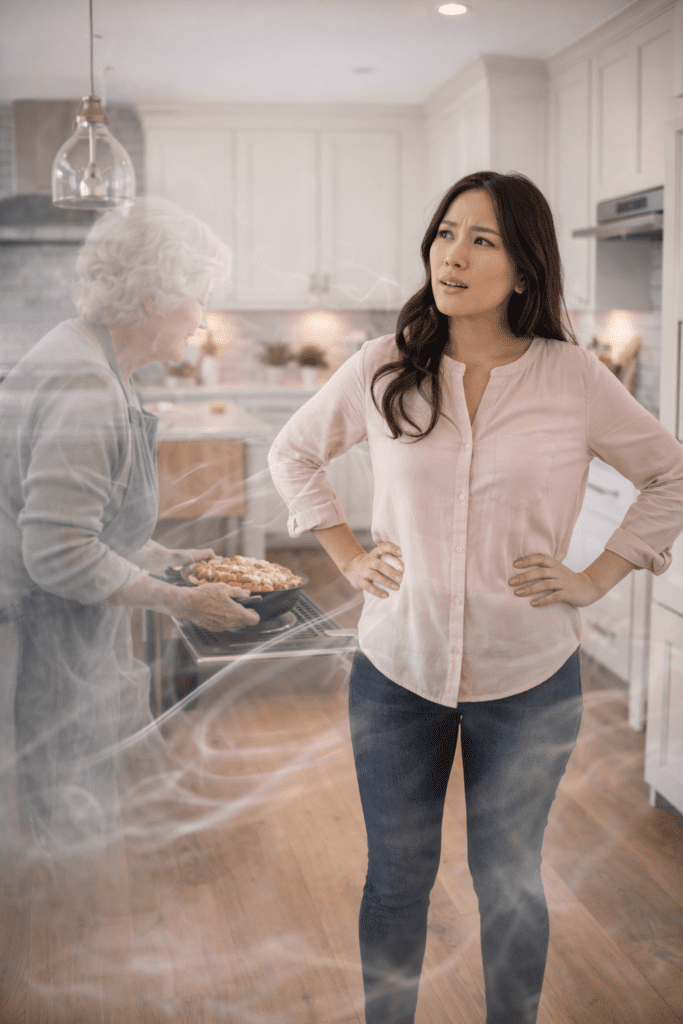
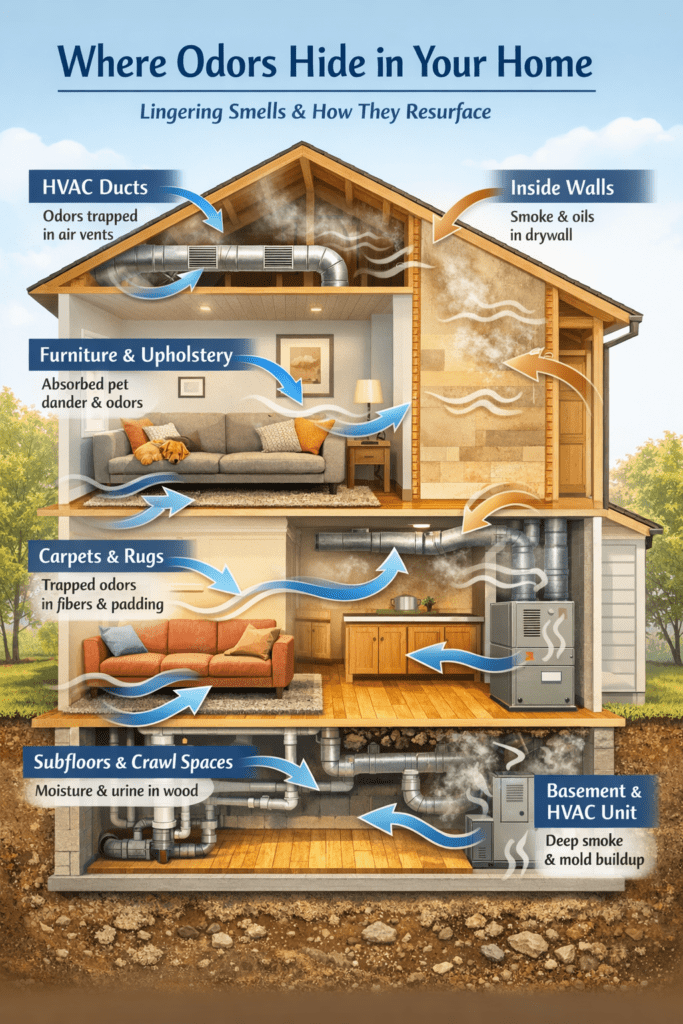
Most persistent home odors aren’t sitting on the surface—they’re absorbed into materials throughout the property.
1. Body Oils & Human Residue
Everyday living leaves behind microscopic layers of:
- Skin oils
- Sweat compounds
- Personal care products
These accumulate in:
- Walls and paint
- Carpets and padding
- Upholstery and drapes
Over time, they oxidize and produce a stale, lived-in odor that basic cleaning won’t touch.
2. Pet Dander & Organic Contaminants
Even if the previous owners cleaned up after their pets, what remains includes:
- Dander embedded in flooring and HVAC systems
- Urine crystals in subfloors
- Saliva proteins in fabrics
These compounds reactivate with humidity, meaning the smell can come and go depending on weather or indoor conditions.
3. Cooking Oils & Kitchen Residue
Cooking—especially frying, spices, and oils—creates airborne particles that:
- Settle on walls, ceilings, and cabinets
- Bond to porous surfaces
- Build up inside ventilation systems
That “old kitchen smell” is often polymerized grease residue, which becomes sticky and odor-producing over time.
Odor Removal in Gaithersburg, MD
4. Smoke (Cigarettes, Cigars, or Even Candles)
Smoke is one of the most persistent odor sources because it:
- Penetrates drywall, insulation, and wood
- Leaves behind tar and nicotine residues
- Embeds into HVAC ductwork
Even if walls were repainted, smoke odor can bleed back through if not properly neutralized at the source.
5. Moisture & Hidden Microbial Activity
If the home had:
- Minor leaks
- High humidity
- Poor ventilation
You may be dealing with early-stage microbial growth or musty odors that aren’t visible—but are very noticeable.
Also Read 📖Maryland’s 10 Worst Smells (And How Pros Remove Them)
Why Standard Cleaning Doesn’t Fix the Problem
Most cleaning methods focus on:
- Surfaces (floors, counters, visible dust)
- Temporary fragrance or masking
- Light sanitation
But odors don’t behave like dirt.
They are:
- Chemical compounds bonded to materials
- Airborne particles trapped in systems
- Deeply embedded residues below surfaces
So while your home may look clean, the odor source is still active underneath.
Also Read 📖The Hidden Cost of Odor Masking in Commercial Cleaning
Real-World Scenario: The “Clean” Home That Wasn’t
A Maryland homeowner purchased a recently renovated property that had:
- Fresh paint
- New flooring
- Professional cleaning completed
Within days, a strong cooking and smoke odor began returning—especially at night.
The cause?
Years of residue trapped in the HVAC system and behind cabinetry.
Once the system ran and temperatures shifted, those compounds were released back into the air.
After proper odor removal treatment targeting:
- Air systems
- Wall cavities
- Residual surface bonding
…the smell was eliminated, and the home finally felt “new.”
Also Read 📖Top Causes for Household Odors & How to Address Them
Why This Matters More Today Than Ever
Homebuyers today are more sensitive to:
- Indoor air quality
- Hidden property conditions
- Move-in readiness
Lingering odors can:
- Affect comfort and sleep
- Create doubt about cleanliness or safety
- Reduce property satisfaction (even after purchase)
And in resale situations, odors can directly impact perceived value and buyer confidence.
The Difference Between Masking and True Odor Removal

Let’s be blunt:
Air fresheners, cleaning sprays, candles and DIY solutions don’t solve this.
They:
- Cover odors temporarily
- Add competing fragrances
- Fade quickly
True odor removal requires:
- Identifying the source compounds
- Breaking them down at a molecular level
- Treating air, surfaces, and hidden zones simultaneously
Also Read 📖Scent vs. Odor: Why Candles and Air Fresheners Make Smells Worse
How Maryland OdorPros Solves the Problem
Maryland OdorPros approaches this differently—because the problem requires it.
Instead of masking, the focus is on source-level odor elimination, including:
- Deep penetration treatment of walls, flooring, and materials
- HVAC and air system decontamination
- Neutralization of organic and chemical odor compounds
- Whole-home treatment strategies designed for real-world living conditions
The result isn’t “better smelling air”—it’s removal of what’s causing the smell in the first place.
What Changes After Proper Treatment
Once odor sources are eliminated, homeowners typically experience:
- Noticeably cleaner, neutral indoor air
- Reduced reappearance of odors during humidity or temperature shifts
- Improved comfort and confidence in the space
-
A true sense of ownership—without the “ghost” of previous occupants
Rising Expectations for Indoor Environments
Over the next few years, expect:
- Increased buyer scrutiny around indoor air quality
- Stronger expectations for odor-free, move-in-ready homes
- Greater demand for documented remediation and treatment
Odor removal is no longer a cosmetic issue—it’s becoming a property standard.
Your Home Should Smell Like Yours—Not Theirs
If your new home still smells like the people who lived there before you, it’s not your imagination—and it’s not your fault.
It’s a sign that what’s beneath the surface hasn’t been addressed yet.
And once it is, everything changes.
If you’re noticing persistent odors in your home, Maryland OdorPros can help identify the source and provide a targeted solution designed for real, lasting results.


(FAQs)
1. Why does my house still smell after deep cleaning?
Because odor-causing compounds are embedded in materials like walls, carpets, and HVAC systems—not just on surfaces.
2. Can old cooking smells be permanently removed?
Yes, but only with treatments that break down grease and odor compounds at the source.
3. Why does the smell get worse at certain times?
Humidity, temperature changes, and airflow can reactivate and release trapped odors.
4. Does repainting remove odors?
Not completely. Odors can bleed through paint if the underlying source isn’t treated.
5. Are pet odors permanent?
They can be persistent, but professional treatment can eliminate the source effectively.
6. Can HVAC systems cause lingering smells?
Yes, ducts and systems often store and redistribute odor particles throughout the home.
7. Do air purifiers remove deep odors?
They help with air quality but don’t remove embedded odor sources in materials.
8. Is odor removal safe for homes and families?
Professional odor removal is designed to be safe when properly applied and controlled.
9. How long does professional odor removal take?
It varies depending on severity, but many treatments are completed within a day or two.
10. Will the smell come back after treatment?
If the source is properly eliminated, odors should not return under normal conditions.
Previous Article: Odor Removal Before a Home Sale: How Realtors Protect Deals
Next Article: Top Causes for Household Odors & How to Address Them