


Why Boats Develop Musty Odors So Quickly: The Complete Chesapeake Bay Boat Owner's Guide
Few things ruin a day on the water faster than stepping into your boat and being greeted by a strong musty odor.
You spent time cleaning the deck. The exterior shines. The upholstery looks spotless. Yet every time you open the cabin door, a damp, moldy smell hits you immediately.
If you've experienced this problem, you're not alone.
Musty boat odors are one of the most common complaints among Maryland boat owners, particularly those who keep vessels in marinas, slips, dry storage facilities, or seasonal waterfront properties along the Chesapeake Bay.
The frustrating part is that the odor often seems to appear without warning—and once it develops, it can be incredibly difficult to eliminate.
The reason is simple:
Boats operate in one of the most odor-friendly environments imaginable.
👉🏻Musty Odor Removal
Why Boats Are More Vulnerable to Odors Than Homes

Most homeowners don't realize that boats face environmental challenges that traditional homes rarely experience.
A home benefits from:
- Stable temperatures
- HVAC systems
- Consistent airflow
- Dry construction materials
- Controlled humidity
Boats face the opposite.
Marine vessels routinely experience:
- High humidity
- Temperature fluctuations
- Condensation
- Water intrusion
- Limited ventilation
- Wet equipment storage
Every one of these conditions contributes to odor development.
Even a small amount of trapped moisture can create an environment where mold, mildew, bacteria, and other odor-producing microorganisms thrive.
Also Read ⛵ OdorPro Tips: Keep Your Maryland Home Smell-Free Year Round
The Chesapeake Bay Humidity Problem

Maryland boat owners face a unique challenge.
The Chesapeake Bay region experiences long periods of elevated humidity during spring, summer, and early fall.
Warm air naturally contains moisture.
When warm, humid air enters a cooler cabin, moisture condenses onto surfaces such as:
- Windows
- Hull interiors
- Upholstery
- Cushions
- Carpeting
- Storage compartments
This condensation often goes unnoticed.
Over time, moisture accumulates in hidden areas where mold and mildew begin growing.
Many boat owners don't discover the problem until odors become noticeable.
Also Read ⛵ Hidden Science of Odor Removal in Maryland | Maryland OdorPros
The Science Behind Musty Boat Odors
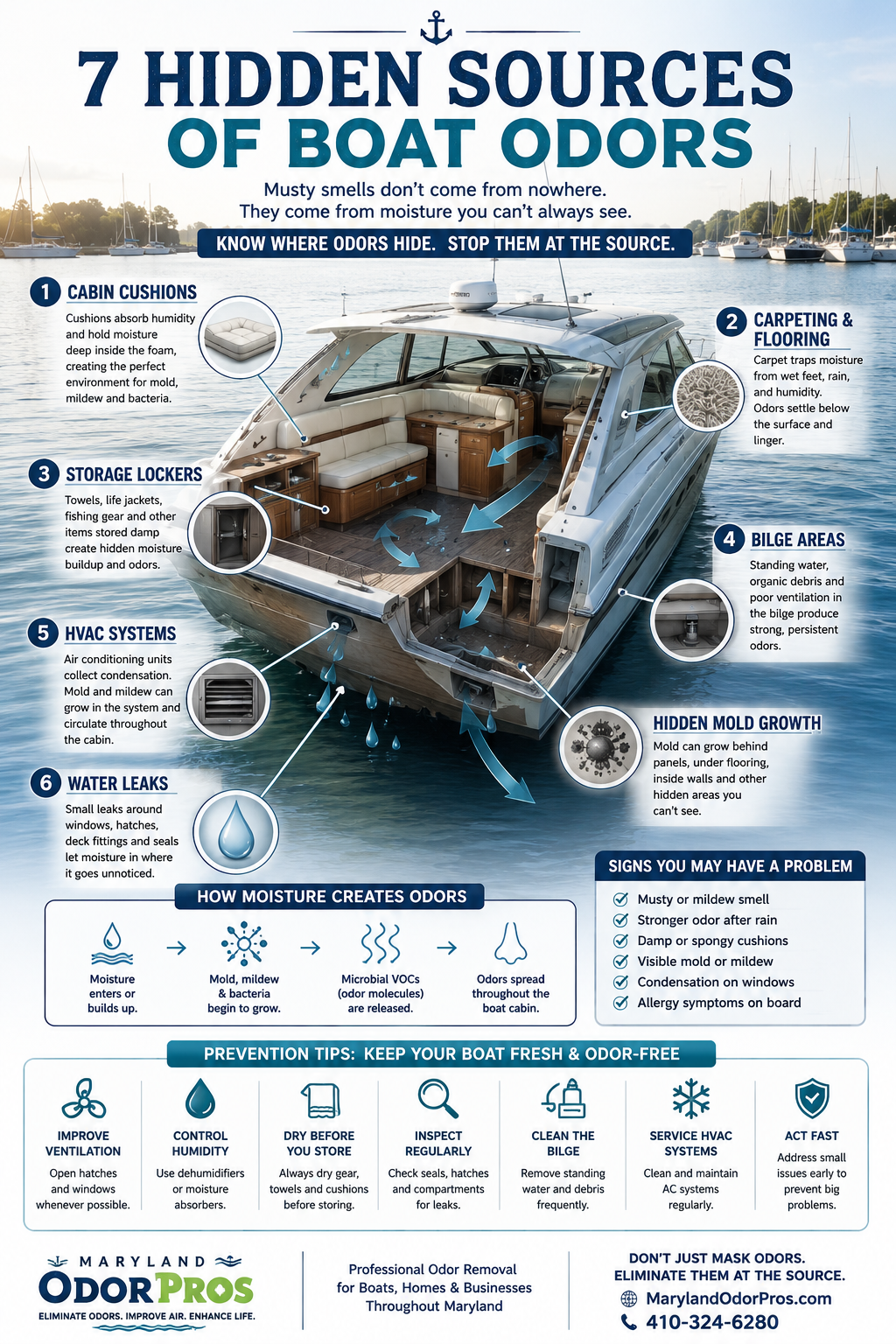
The "musty" smell most people associate with boats is typically produced by microbial volatile organic compounds (MVOCs).
These compounds are released when mold and mildew consume organic material.
Common food sources include:
- Dust
- Dirt
- Dead skin cells
- Fabric fibers
- Wood materials
- Organic debris
As mold colonies grow, they release gases that create the familiar musty smell.
This means that the odor itself is often an early warning sign of hidden microbial activity.
Real-World Maryland Boating Scenario
Imagine an Annapolis boat owner who stores his vessel at a marina throughout the summer.
The boat sits closed during a stretch of humid weather.
Over several weeks:
- Cabin temperatures fluctuate dramatically
- Humidity builds
- Condensation forms nightly
- Air circulation decreases
When he returns, the cabin smells musty.
The odor isn't coming from one visible source.
Instead, it has developed gradually across multiple moisture-prone surfaces.
This scenario occurs thousands of times every year throughout Maryland.
⛵Odor Removal in Annapolis, MD
Why DIY Boat Odor Solutions Usually Fail
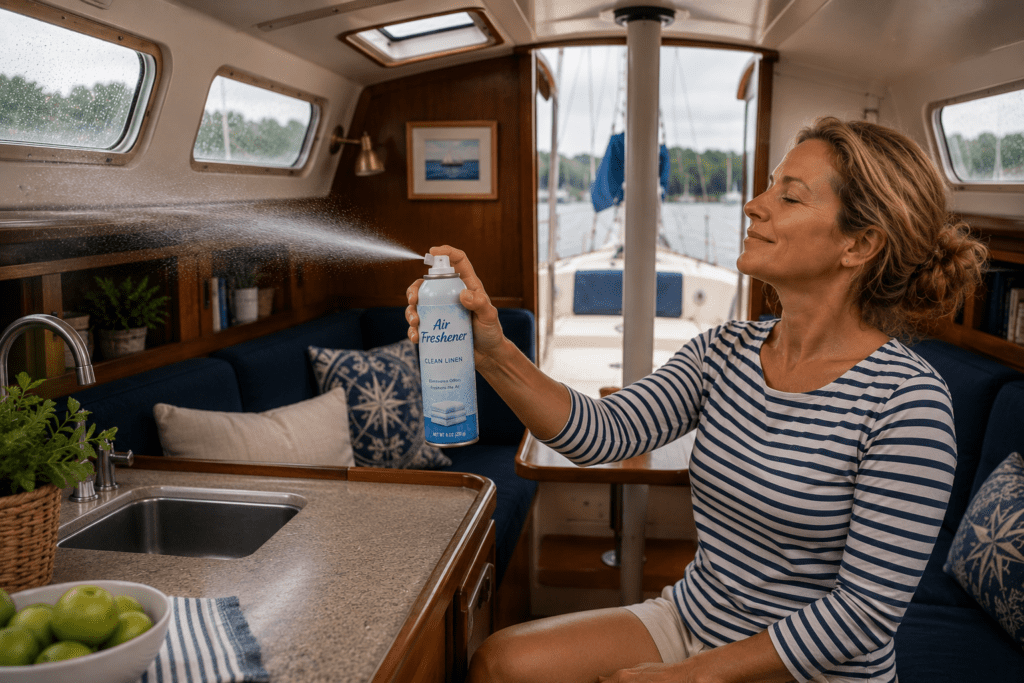
Many boat owners attempt to solve odor problems using:
- Air fresheners
- Fragrance sprays
- Odor bombs
- Scented cleaners
- Household disinfectants
These products often provide temporary improvement.
Unfortunately, they rarely eliminate the underlying source.
The odor returns because:
- Moisture remains
- Mold remains
- Bacteria remain
- Contaminated materials remain
Successful odor removal requires identifying and addressing the source rather than covering the smell.
Also Read ⛵ Why Your New Home Still Smells After Cleaning (And What It Means)
Health Concerns Associated With Moldy Boat Cabins
While odor is often the first noticeable symptom, mold and mildew can also impact indoor air quality.
Potential concerns may include:
- Eye irritation
- Nasal congestion
- Respiratory discomfort
- Allergy symptoms
- Increased sensitivity among susceptible individuals
Persistent odors should never be ignored simply because they seem harmless.
Also Read ⛵ Indoor Air Quality & Odor: Health Risks of Lingering Smells
How Boat Owners Can Prevent Musty Odors
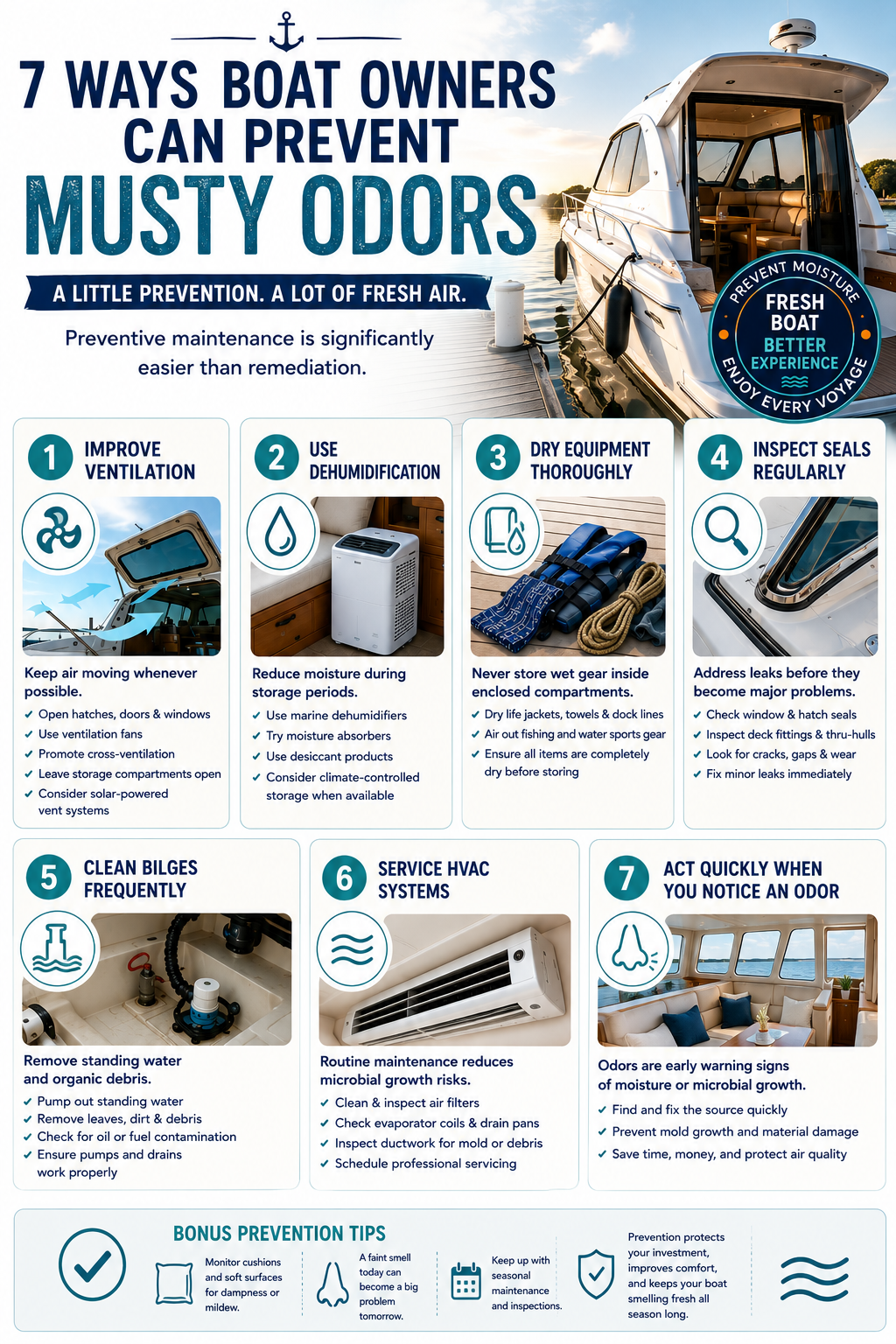
The good news is that most musty boat odors are preventable. While Maryland's humid Chesapeake Bay climate creates ideal conditions for mold, mildew, and moisture-related odor problems, a proactive maintenance routine can dramatically reduce the risk of persistent cabin smells.
Preventive maintenance is almost always less expensive, less time-consuming, and more effective than trying to eliminate established odors after they have taken hold.
Here are some of the most effective strategies Maryland boat owners can implement throughout the boating season.
1. Improve Ventilation
Stagnant air is one of the biggest contributors to odor development.
When cabins remain closed for extended periods, humidity becomes trapped inside the vessel. This trapped moisture creates an environment where mold, mildew, and odor-producing bacteria can thrive.
Whenever conditions allow:
- Open cabin doors and hatches
- Use ventilation fans
- Promote cross-ventilation
- Leave storage compartments open while docked
- Install solar-powered vent systems for long-term airflow
Even a small increase in air circulation can significantly reduce moisture accumulation.
2. Use Dehumidification During Storage
Humidity is the enemy of odor control.
Many Maryland boat owners store their vessels during periods of high summer humidity or throughout the off-season. During these periods, moisture levels inside enclosed cabins can rise dramatically.
Consider:
- Marine dehumidifiers
- Moisture absorbers
- Desiccant products
- Climate-controlled storage when available
Maintaining lower humidity levels helps prevent mold and mildew growth before it begins.
3. Dry Equipment Thoroughly Before Storage
One of the most common odor mistakes boat owners make is storing damp gear.
Items such as:
- Life jackets
- Towels
- Dock lines
- Fishing equipment
- Water sports gear
- Cleaning supplies
can introduce significant moisture into enclosed compartments.
Always allow equipment to dry completely before placing it back into lockers or storage areas.
4. Inspect Seals, Windows, and Hatches Regularly
Small leaks often go unnoticed until odors begin developing.
Regularly inspect:
- Window seals
- Hatch gaskets
- Deck fittings
- Door seals
- Through-hull fittings
Even minor water intrusion can create hidden moisture pockets that support mold and mildew growth.
Addressing leaks early can prevent extensive odor problems and costly repairs later.
5. Clean Bilges Frequently
Bilges are one of the most overlooked sources of boat odors.
Standing water combined with organic debris can create ideal conditions for bacterial growth and unpleasant smells.
A routine bilge maintenance schedule should include:
- Removing standing water
- Cleaning accumulated debris
- Inspecting pumps and drainage systems
- Checking for oil or fuel contamination
- Monitoring for unusual odors
A clean bilge often contributes significantly to a fresher-smelling boat.
6. Service HVAC Systems and Air Handlers
Marine air conditioning systems naturally produce condensation during operation.
Without proper maintenance, moisture can accumulate within:
- Evaporator coils
- Drain pans
- Ductwork
- Air handlers
These areas can become breeding grounds for mold and mildew.
Routine inspections and professional servicing help maintain both odor control and indoor air quality.
7. Monitor Cushions and Soft Surfaces
Boat cushions, mattresses, carpeting, and upholstered surfaces are highly susceptible to moisture retention.
Periodically inspect soft materials for:
- Dampness
- Discoloration
- Mildew spots
- Persistent odors
Allow cushions to air out whenever possible and replace materials that have sustained significant moisture damage.
Act Quickly When You Notice an Odor
One of the biggest mistakes boat owners make is ignoring a faint musty smell.
Odors are often an early warning sign that moisture is accumulating somewhere onboard.
The sooner the source is identified, the easier it is to prevent:
- Mold growth
- Material damage
- Air quality issues
- Expensive remediation projects
In many cases, a minor moisture issue today can become a major odor problem by the end of the season.
Prevention Is Always Easier Than Remediation
Most serious boat odor problems begin with small amounts of hidden moisture that go unnoticed for weeks or months.
By focusing on ventilation, humidity control, leak prevention, equipment maintenance, and routine inspections, Maryland boat owners can significantly reduce the likelihood of developing the musty odors that commonly affect vessels throughout the Chesapeake Bay region.
A few preventive steps today can help protect your investment, improve onboard comfort, and keep your boat smelling fresh all season long.
Also Read ⛵ Maryland’s 10 Worst Smells (And How Pros Remove Them)
When Professional Boat Odor Removal Becomes Necessary
Professional odor remediation may be beneficial when:
- Odors return repeatedly
- Mold growth is suspected
- Water damage has occurred
- DIY efforts have failed
- Multiple odor sources are present
Professional odor elimination focuses on identifying contamination sources and neutralizing odors at their origin rather than masking symptoms.
⛵About Us
Why Maryland Boat Owners Trust Professional Odor Elimination
The Chesapeake Bay environment presents unique moisture challenges.

Boat owners throughout:
frequently encounter odor issues related to humidity, mold, mildew, and enclosed storage conditions.
Professional treatment helps restore comfort while protecting the long-term condition of vessel interiors.
Give Us A Call...
Musty boat odors rarely appear overnight.
They are typically the result of hidden moisture, humidity, poor ventilation, and microbial growth developing gradually over time.
Because Maryland's marine environment creates ideal conditions for odor development, boat owners who understand the causes of musty smells are far better equipped to prevent them.
The sooner moisture problems are addressed, the easier and less expensive odor control becomes.
If your boat smells musty despite repeated cleaning efforts, the issue may be deeper than surface contamination.
Maryland OdorPros specializes in identifying and eliminating stubborn odors at their source so boat owners can enjoy a cleaner, fresher boating experience throughout the Chesapeake Bay region.
📞Contact Us

🏡Home
FAQs
Why does my boat smell musty even after cleaning?
The odor source is often hidden moisture, mold, mildew, or contaminated materials beneath visible surfaces.
Can mold grow inside a boat cabin?
Yes. High humidity and trapped moisture create ideal conditions for mold growth.
Are boat odors harmful?
Some odors may indicate mold or microbial contamination that can affect indoor air quality.
Why does my boat smell worse after rain?
Rain increases humidity and moisture intrusion, which can intensify existing odor problems.
Can boat cushions hold odors?
Yes. Foam cushions frequently trap moisture and odor-causing contaminants.
What is the most common source of boat odors?
Hidden moisture combined with mold and mildew growth.
Will air fresheners eliminate boat odors?
No. They typically mask odors rather than remove their source.
How often should boat cabins be ventilated?
As frequently as practical, especially during humid months.
Can HVAC systems cause boat odors?
Yes. Mold and mildew can develop inside marine air conditioning systems.
When should I call a professional odor removal company?
If odors persist despite cleaning, continue returning, or are associated with suspected mold growth.