

How to Keep Your Maryland Home Smell-Free All Year
Maryland weather has a personality problem.
One week it’s swampy and humid. The next it’s freezing rain and damp cold. Add coastal moisture, older homes, basements, pets, seafood cooking, and tightly sealed winter insulation, and suddenly your house starts developing “mystery smells” nobody wants to talk about.
The truth is, most persistent household odors don’t happen overnight. They build slowly through moisture, trapped air, bacteria, HVAC circulation, and hidden contamination.
And in Maryland’s climate, odor problems can escalate fast.
At Maryland OdorPros, we see the same seasonal patterns every year:
- Musty basements in summer
- Damp carpet smells in winter
- HVAC odors during seasonal transitions
- Pet odors amplified by humidity
- Lingering cooking odors trapped indoors
- Moldy smells after storms or flooding
The good news? Most odor issues can be reduced or prevented with smart seasonal maintenance and better indoor air quality habits.
Here’s how Maryland homeowners can keep homes smelling fresh year-round — without relying on heavy fragrances or temporary masking products.
Why Maryland Homes Struggle With Odors
Maryland’s climate creates ideal conditions for odor retention because of:
- High summer humidity
- Wet seasonal transitions
- Coastal moisture
- Damp crawlspaces and basements
- Older housing stock
- Closed-up winter homes
- Rapid temperature swings
Humidity is one of the biggest contributors because moisture reactivates odor molecules trapped in:
- Carpets
- Furniture
- Drywall
- Wood
- HVAC systems
- Clothing
- Insulation
That’s why a house may smell “fine” in winter but suddenly develop musty odors in July.
Also Read 📖Can We Live Without Odors? The Science Behind Smell and How to Control It
Summer: Humidity Is the Enemy
Maryland summers are brutal on indoor air quality.
Warm humid air creates ideal conditions for:
- Mold growth
- Mildew odors
- Damp carpet smells
- Pet odor intensification
- HVAC moisture buildup
- Bathroom odors
- Basement mustiness
OdorPro Summer Tips
1. Keep Indoor Humidity Between 35–50%
A quality dehumidifier can dramatically reduce odor buildup in:
- Basements
- Crawlspaces
- Laundry rooms
- Bathrooms
Once humidity rises above 60%, microbial activity increases rapidly.
2. Don’t Ignore HVAC Maintenance
Dirty evaporator coils and clogged condensate drains create “dirty sock syndrome” odors.
Have HVAC systems inspected before peak summer heat arrives.
3. Ventilate After Cooking Seafood
Maryland crab boils are delicious.
The lingering odor trapped in curtains and upholstery? Less charming.
Use:
- Exhaust fans
- Cross ventilation
- Immediate trash removal
- Surface degreasing
The longer seafood residue sits in humidity, the worse it becomes.
4. Dry Wet Items Immediately
Wet towels, rugs, shoes, and pet bedding become bacterial breeding grounds fast during summer.
If it stays damp, it starts smelling.
Also Read📖New Pet at Home? How to Prevent Odors Before They Start
Fall: The Hidden Transition Season
Fall is when many homeowners unknowingly trap odors inside the home.
Windows close. Airflow decreases. Heating systems restart. Humidity fluctuates.
Common Fall Odor Issues
- Dusty HVAC smells
- Damp leaf odors entering the home
- Lingering summer moisture
- Mold growth from clogged gutters
- Wet pet odors
OdorPro Fall Tips
Clean Gutters and Drainage Areas
Overflowing gutters increase moisture near:
- Foundations
- Basements
- Crawlspaces
This can lead to hidden mildew odors.
Replace HVAC Filters
Seasonal HVAC startup often pushes accumulated dust and odor particles into living spaces.
Deep Clean Carpets Before Winter
Fall is one of the best times for professional carpet cleaning because trapped summer humidity often leaves odor residue behind.
Also Read 📖Indoor Air Quality & Odor: Health Risks of Lingering Smells
Winter: The “Closed House” Problem

Maryland winters create a different challenge.
Homes become sealed environments with:
- Reduced airflow
- Dry indoor heating
- Trapped cooking odors
- Pet smells
- Poor ventilation
Why Winter Odors Linger
Without airflow, odor molecules stay suspended longer indoors.
This is especially common in:
- Smaller homes
- Apartments
- Rowhomes
- Tightly insulated properties
OdorPro Winter Tips
1. Use Ventilation Even in Cold Weather
Even 5–10 minutes of airflow can help exchange stale indoor air.
2. Watch for Basement Dampness
Winter condensation still occurs in basements and crawlspaces — especially during freeze-thaw cycles.
3. Clean Soft Surfaces More Often
Winter fabrics absorb odors heavily:
- Blankets
- Curtains
- Upholstery
- Pet bedding
4. Keep Air Circulating
Ceiling fans on low settings help reduce stale air pockets.
Spring: Maryland’s Mold Season
Spring moisture is one of the biggest odor triggers in Maryland homes.
Heavy rains and warming temperatures often create:
- Basement odors
- Mold growth
- Damp drywall smells
- Wet soil odors
- Crawlspace humidity spikes
OdorPro Spring Tips
Inspect for Hidden Water Damage
Check:
- Around windows
- Basement corners
- Under sinks
- Attic spaces
- Crawlspaces
Small leaks become major odor sources quickly.
Clean and Dry Outdoor Entry Areas
Mud, pollen, organic debris, and moisture tracked indoors can create lingering odors.
Service Dehumidifiers Early
Don’t wait until July humidity arrives.
Also Read 📖Basement Smells Like a Swamp? Mold, Musty & Sewage Odors Explained | Maryland OdorPros
Real-World Maryland Scenario
A homeowner near Annapolis noticed a “wet towel” smell every summer despite frequent cleaning.
The cause wasn’t the carpet.
It was:
- High basement humidity
- HVAC airflow contamination
- Damp subfloor materials
After professional moisture control and deodorization treatment, the recurring odor cycle stopped.
That’s why professional odor diagnosis matters. The smell source is not always where the odor appears strongest.
Why Professional Odor Prevention Matters

Professional odor remediation focuses on:
- Source detection
- Moisture control
- Air quality improvement
- Molecular neutralization
- Long-term prevention
This is especially important in Maryland where climate conditions naturally encourage odor retention.
As indoor air quality awareness grows, homeowners are paying closer attention to:
- Musty smells
- HVAC odors
- Dampness
- Pet contamination
- Air freshness
And increasingly, odors affect:
- Property value
- Rental turnover
- Hospitality reviews
- Homebuyer perception
- Indoor comfort
Also Read 📖Hidden Science of Odor Removal in Maryland | Maryland OdorPros
Final Thoughts
A smell-free home doesn’t happen by accident in Maryland.
Humidity, moisture, seasonal transitions, and poor airflow constantly work against indoor freshness.
But with smart maintenance, ventilation, moisture control, and fast response to odor warning signs, homeowners can dramatically reduce persistent odor problems year-round.
And remember:
If an odor keeps returning, there’s usually a deeper source behind it.
The key is finding it before it spreads further into the structure.
At Maryland OdorPros, we don’t mask odors — we eliminate them at the source.
10 FAQs

1. Why do homes smell worse during Maryland summers?
High humidity reactivates odor molecules trapped in carpets, furniture, drywall, and HVAC systems.
2. What humidity level should a home stay at?
Ideally between 35–50% to help reduce mold, mildew, and odor problems.
3. Why does my basement smell musty after rain?
Moisture intrusion and elevated humidity can activate microbial growth and trapped odor compounds.
4. Can HVAC systems spread odors through the home?
Yes. Dirty ductwork, coils, and filters can circulate odor particles throughout the property.
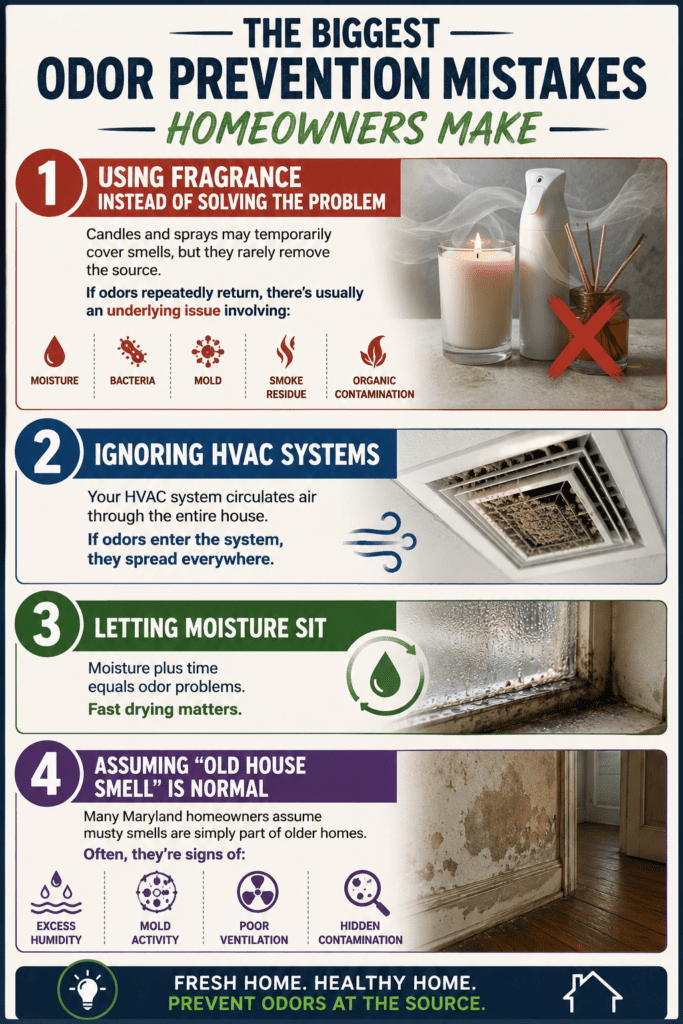
5. Are candles and air fresheners enough to solve odor issues?
Usually not. They often mask odors temporarily without addressing the contamination source.
6. How often should carpets be professionally cleaned?
At least annually, and more often in homes with pets, moisture issues, or heavy traffic.
7. Why do homes smell stale in winter?
Reduced ventilation traps cooking, pet, and household odors indoors.
8. Can dehumidifiers help prevent odors?
Yes. Lower humidity reduces microbial activity and odor retention.
9. What are signs an odor problem may be serious?
Recurring smells, worsening humidity odors, visible moisture, or odors returning after cleaning.
10. When should homeowners call an odor remediation professional?
When odors persist despite cleaning or when moisture, mold, smoke, or pet contamination may be involved.