


Buying a House With a Strange Smell? What to Check Before Closing
Estimated Reading Time: 9 Minutes
A strange smell during a home showing isn't automatically a reason to walk away, but it is a reason to investigate before closing. Musty, pet urine, smoke, sewage, and chemical odors can have different causes, ranging from manageable cleaning issues to hidden moisture damage or contaminated materials. Before buying, identify where the odor is strongest, ask about previous damage or treatments, and arrange an appropriate professional evaluation if the source remains unclear. Understanding the cause and potential cost of correction helps you make an informed purchasing decision.
Executive Brief
A strange smell during a home showing should never be dismissed without understanding its source. Musty odors may signal moisture problems, while lingering pet urine, smoke, or sewage odors can indicate conditions that require more than routine cleaning. Before closing, homebuyers should investigate unexplained smells, ask for documentation of previous damage or repairs, and determine whether a specialized evaluation is warranted. Identifying the cause early can help buyers understand potential remediation costs, negotiate appropriate solutions, and avoid inheriting an expensive problem.
Key Takeaways
- Follow the odor to its source. A persistent smell may originate in flooring, subfloors, walls, plumbing, or HVAC systems. Covering it with fragrance does not resolve the underlying issue.
- Look beyond the standard home inspection. Ask about previous water damage, pets, smoking, and odor treatments. If the cause remains unclear, consider an evaluation by an appropriately qualified professional.
- Resolve uncertainty before closing. Obtain relevant findings and estimates, review your contract deadlines, and discuss repair requests or other options with your real estate professional before finalizing the purchase.
You've found a house that checks nearly every box. The location is perfect, the layout works, and you can already imagine moving in. But during the walkthrough, something catches your attention.
An unusual smell.
Maybe it's a faint mustiness in the basement, a lingering pet odor near the carpet, or a heavy fragrance that seems unusually strong throughout the house.
Should you be concerned about an unexplained odor before buying a home?
Yes. An unfamiliar smell doesn't automatically mean a property has a serious problem, but it deserves investigation before closing. Some odors come from relatively simple maintenance issues. Others may indicate moisture intrusion, contaminated flooring, smoke residue, or problems hidden behind finished surfaces.
Understanding the source before purchasing can help you avoid unexpected expenses and make a more informed decision.
Why an Unexplained Odor Matters During a Home Purchase
When evaluating a home, buyers naturally concentrate on the roof, foundation, HVAC system, plumbing, and other visible components.
Odors are different. You cannot always see their source, and a freshly cleaned or recently painted property may temporarily smell perfectly acceptable.
The challenge is determining whether the odor is a temporary condition or evidence of something that needs repair.
For example, a musty basement could have an ordinary humidity problem, but it could also indicate unresolved moisture intrusion. Similarly, a room that smells like pet urine may have contamination extending beyond the carpet into the padding or subfloor.
The important question isn't simply whether the house smells unpleasant. It's why the odor exists and what correcting its source will require.
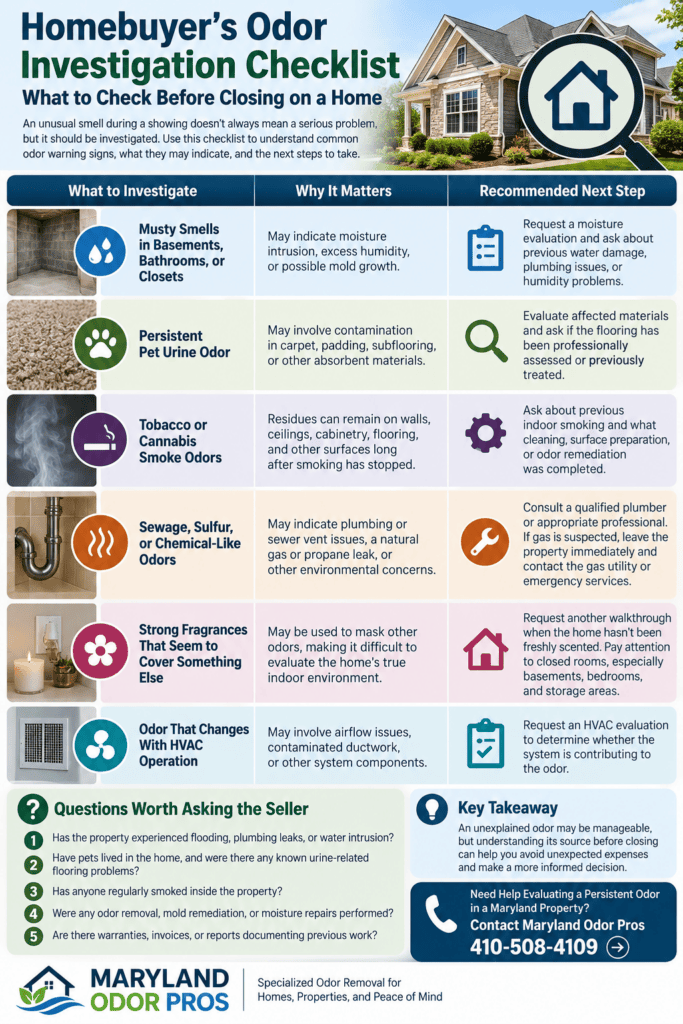
Five Odor Warning Signs Homebuyers Should Investigate
Not every unusual smell is a reason to abandon a home purchase. However, certain odor patterns deserve closer attention.
1. Musty Smells in Basements, Bathrooms, or Closets
Musty odors are frequently associated with excess moisture and may indicate microbial growth.
According to the U.S. Environmental Protection Agency (EPA), a moldy odor can suggest mold growth even when the source isn't visible. The agency recommends investigating these odors rather than assuming they're harmless.
Potential contributors include:
- Water intrusion through basement walls or foundations
- Plumbing leaks behind walls or beneath fixtures
- Poor ventilation and elevated indoor humidity
- Previously wet carpeting, drywall, or insulation
- Condensation around HVAC components
The EPA also emphasizes that controlling moisture is essential to preventing recurring mold problems. Simply eliminating an odor without correcting the moisture source may leave the underlying problem unresolved.
Maryland homebuyers who notice musty odors during wet weather may find additional guidance in our article, Why Does My House Smell Musty When It Rains?.
Buyer consideration: Ask about previous water damage, basement flooding, plumbing repairs, and moisture-related work performed on the property.
2. Pet Urine Odors That Persist After Cleaning
Pet odors can be particularly challenging because urine may penetrate absorbent materials.
Carpeting can look clean while contamination remains in the padding or underlying flooring. In more severe situations, urine may reach wood subfloors, seams, baseboards, or other porous materials.
The concern for buyers isn't simply whether the carpet needs shampooing. It's whether the affected materials can be successfully treated or require replacement.
Maryland Odor Pros' experience with professional pet odor removal highlights why treatment methods must account for the type of material affected and how deeply contamination has penetrated.
Some flooring materials respond to appropriate treatment, while others may need to be removed before odor remediation can be successful.
Buyer consideration: If a room smells strongly of urine, ask whether the flooring has been professionally evaluated and whether previous cleaning or remediation attempts were documented.
3. Tobacco or Cannabis Smoke Odors
Smoke-related odors can remain long after smoking has stopped.
Residues may accumulate on walls, ceilings, cabinetry, flooring, and other surfaces. Soft furnishings and porous materials may also retain odor-producing compounds.
A fresh coat of paint or scented cleaning products may improve the initial impression without fully addressing contamination.
Buyers should pay attention to odors inside closets, cabinets, and other enclosed areas, especially when a home has recently been repainted.
Maryland Odor Pros addresses persistent smoke odors as part of its professional odor removal services. However, the appropriate treatment depends on the extent of contamination and the materials involved.
Buyer consideration: Ask about previous indoor smoking and what cleaning, surface preparation, or odor remediation was completed.
4. Sewage, Sulfur, or Chemical-Like Odors
Some odors require a different kind of investigation because they may indicate plumbing, fuel-gas, or environmental concerns.
A sewage smell could originate from a dry drain trap, damaged drain line, or sewer vent problem. Chemical or petroleum-like odors may warrant evaluation for contamination or mechanical issues.
A rotten-egg smell may indicate a natural gas or propane leak. If gas is suspected, leave the property immediately, avoid switches and ignition sources, and contact the gas utility or emergency services from a safe location.
Buyer consideration: Do not assume these odors can be resolved with deodorization. Have the appropriate qualified professional identify and correct the underlying problem first.
5. Strong Fragrances That Seem to Cover Something Else
An overpowering scent isn't proof that a seller is hiding a problem.
However, heavy use of air fresheners, candles, scented sprays, or fragranced cleaning products can make it more difficult to evaluate a property's natural indoor environment.
If possible, request another walkthrough when the home hasn't been freshly scented.
Pay attention to rooms that have been closed off, particularly basements, bedrooms, and storage areas.
A home's smell can also change with humidity, ventilation, and occupancy. Our article on why a house smells different after vacation explains how changes in the indoor environment and our sense of smell can reveal odors that previously went unnoticed.
Buyer consideration: A second visit under different conditions can help determine whether the initial odor was temporary or persistent.
What a Standard Home Inspection May Not Tell You About Odors
A professional home inspection is an important part of purchasing a property, but buyers should understand its limitations.
The American Society of Home Inspectors (ASHI) Standards of Practice explain that a standard inspection primarily evaluates readily accessible, visually observable systems and components.
It is not necessarily a comprehensive environmental assessment.
Depending on the inspection agreement and applicable standards, a routine inspection may not determine:
- The exact source of an unexplained odor
- Whether pet urine has penetrated beneath finished flooring
- The presence of concealed mold or microbial contamination
- The extent of smoke residue within building materials
- Whether previous odor treatments successfully addressed the problem
A home inspector may identify visible water damage, plumbing defects, or other conditions associated with an odor. However, specialized testing or evaluation may be needed to investigate the source further.
The smartest approach is to use the general inspection and any necessary specialist evaluations together—not assume one replaces the other.
What Maryland Odor Pros' Experience Reveals About Hidden Odors
For homebuyers, one of the biggest challenges is determining whether an unpleasant odor is a surface-level problem or something embedded in the property itself.
That distinction is familiar to Maryland Odor Pros owner George Melnychenko, whose professional background began in carpet cleaning before expanding into specialized odor remediation.
After serving as a Naval Officer, George operated a carpet cleaning business serving Maryland communities. His experience with pet-related carpet odors helped establish a practical understanding of how contamination can persist in flooring and other materials.
As his business evolved, he shifted his focus toward specialized odor removal, including persistent pet, smoke, and musty odors in homes and other enclosed spaces.
Today, Maryland Odor Pros evaluates odor concerns according to their source and the materials involved.
Depending on the circumstances, the company's treatment approaches may include chlorine dioxide (ClO₂) technology or bio-enzymatic methods. These approaches are not interchangeable, and treatment selection depends on the nature of the odor and the affected surfaces.
This distinction is particularly relevant when evaluating a home with pet urine or smoke odors. Carpeting, padding, subflooring, and other building materials may require different approaches. In some cases, contaminated materials must be removed or replaced.
Maryland Odor Pros also recognizes that persistent odors may require more than ordinary cleaning. Its service information discusses situations in which deeply embedded contamination can make material replacement necessary.
For prospective homebuyers, the company offers an initial telephone consultation and an optional paid on-site inspection to discuss the odor concern and potential treatment options.
Learn more about Maryland Odor Pros' professional background and approach.
The takeaway for buyers: Don't assume an odor is a simple cleaning problem until you understand where it's coming from and what correcting it may involve.
Should You Request Professional Odor Evaluation Before Buying?
If an odor persists after ordinary explanations have been ruled out, a specialist evaluation may help clarify the situation.
The appropriate professional depends on the suspected source.
A plumber should address plumbing-related odors. A qualified moisture or mold professional may be needed for water damage and suspected microbial growth. An HVAC contractor can investigate equipment or ventilation problems.
For persistent pet, smoke, and other residual odors, an experienced odor removal specialist can help evaluate the affected areas and discuss treatment possibilities.
Maryland Odor Pros works with residential and commercial property owners dealing with persistent odors, including pet, smoke, and musty odors.
The company offers an initial telephone consultation and an optional on-site assessment to discuss the odor problem and potential treatment approach.
You can also explore why odors sometimes return after deep cleaning to better understand why surface cleaning may not resolve contamination within absorbent materials.
How an Odor Problem Can Affect Your Buying Decision
Discovering an odor doesn't necessarily mean you should walk away from a property.
Instead, consider three questions.
First: Has the source been identified?
Without knowing what causes the odor, it's difficult to estimate the work needed to resolve it.
Second: Does the problem require repair, replacement, or odor treatment?
Some situations involve cleaning or treatment. Others require plumbing repairs, moisture correction, or removal of damaged materials before deodorization can be effective.
Third: Can the issue be evaluated before your contractual deadlines?
Discuss inspection contingencies, specialist access, repair requests, and potential credits with your real estate agent and, where appropriate, a real estate attorney.
The goal is to make decisions using documented information rather than assumptions about what a lingering smell might mean.
A Better Home Purchase Begins With Better Questions
Buying a home is a major financial commitment, and even a seemingly minor concern deserves attention when its cause is unknown.
An unusual odor may be manageable. It may also point toward a larger issue involving moisture, flooring, ventilation, or building materials.
By investigating before closing, requesting appropriate professional evaluations, and understanding the likely scope of corrective work, buyers can make decisions with greater confidence.
A beautiful home should offer more than an attractive first impression. It should give you confidence in what you're purchasing.
Found a Strange Smell During a Home Showing? Get Answers Before Closing
Buying a home is a major investment, and an unexplained odor deserves attention before you finalize the purchase. Whether you're concerned about lingering pet urine, smoke, or a persistent musty smell, understanding the likely source can help you determine your next steps.
At Maryland Odor Pros, George Melnychenko brings hands-on odor remediation experience to conversations about difficult residential odor problems. Rather than simply masking an unpleasant smell, the goal is to understand what may be causing it and whether professional odor remediation could help.
Not sure what you're smelling or whether it can be treated?
Start with a phone consultation. Describe the odor, where you've noticed it, and any information the seller has provided. Maryland Odor Pros can discuss potential next steps and whether an on-site evaluation may be appropriate.
Contact Maryland Odor Pros before closing so you can make your purchasing decision with more information and fewer unanswered questions.
Call: 410-508-4109


Frequently Asked Questions
1. Should I buy a house that has a strange smell?
A strange smell doesn't automatically make a home a bad investment. However, you should investigate its source before closing. Determine whether the problem involves routine maintenance, contaminated materials, moisture damage, or a condition requiring specialized repairs. Understanding the cause and potential cost will help you make an informed purchasing decision.
2. Can a home inspection identify the source of an odor?
A standard home inspection may identify visible conditions associated with an odor, such as leaks, water damage, or plumbing deficiencies. However, inspectors are not necessarily required to locate hidden odor sources or conduct specialized environmental testing. Additional evaluations may be necessary.
3. Does a musty smell always mean a house has mold?
No. Musty odors can have several causes, including excess humidity and damp building materials. However, the EPA advises investigating moldy odors because they can indicate microbial growth. Moisture conditions should be evaluated rather than simply covering the smell with fragrance.
4. Can pet urine odors be removed without replacing flooring?
Sometimes. The outcome depends on the affected material, the extent of contamination, and how deeply urine has penetrated. Surface-level contamination may respond to appropriate treatment, while severely affected padding or subflooring may require removal or replacement.
5. Can smoke odor return after a house has been repainted?
Yes. Smoke-related residues may remain on or within surfaces that were not adequately cleaned or treated before painting. Odors may persist or become noticeable again under certain environmental conditions. Proper surface preparation and evaluation of contaminated materials are important.
6. Should I ask the seller to fix an odor problem before closing?
That depends on the findings, the purchase agreement, and the advice of your real estate professional. Once the source and corrective work are understood, buyers may consider requesting repairs, additional documentation, or a negotiated credit. Contractual options and deadlines vary.
7. Can professional odor removal address every odor in a home?
No single treatment is appropriate for every situation. Professional odor removal can help with many persistent odors, but active leaks, plumbing failures, gas leaks, and other underlying problems must be addressed by qualified professionals. Treatment effectiveness also depends on the odor source and affected materials.
8. When should I contact Maryland Odor Pros before purchasing a property?
Consider contacting Maryland Odor Pros when a prospective home has persistent pet, smoke, or other residual odors that remain unexplained after initial investigation. An early conversation can help you understand whether an on-site assessment or specialized odor treatment may be appropriate before closing.
Continue Exploring Household Odors
Understanding unusual household odors can help homeowners and prospective buyers recognize problems before they become more expensive to address.
Explore these related Maryland Odor Pros resources:
- Why Does My House Smell Musty When It Rains? — Learn how moisture and changing weather conditions can influence indoor odors.
- Why Does My House Smell Different After I've Been Away? — Understand why familiar household smells can become more noticeable after a period away.
- Why Do Some Odors Come and Go? — Explore how temperature, humidity, airflow, and other conditions can influence intermittent odors.