

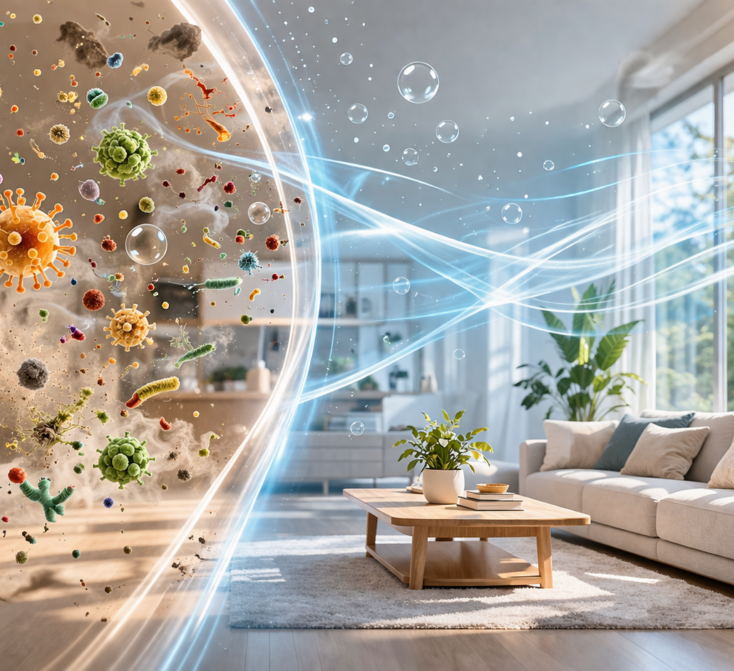
The Big Question: Can We Eliminate Odors Completely?

It sounds appealing—no bad smells, ever.
But here’s the truth:
A world without odors isn’t just unrealistic—it wouldn’t be safe or natural.
Odors play a critical role in:
- Alerting us to danger (smoke, gas, spoilage)
- Influencing memory and emotion
- Helping us interpret our environment
The real goal isn’t to eliminate all odors—
it’s to eliminate the wrong ones.
What Are Odors, Really? (And Why They Matter)
At a scientific level, odors are airborne chemical compounds—often called odorants—that interact with receptors in your nose.
When you detect a smell:
- Molecules travel through the air
- They bind to olfactory receptors
- Your brain interprets them as a scent
That’s why odor isn’t just in the air—it’s a physical, chemical presence.
“If you can smell it, there are actual particles in your environment causing it.”
Where Do Odors Come From?
Odors don’t appear randomly—they’re the result of active processes happening in materials, air, or moisture zones.
Primary Sources of Odorants
1. Biological Processes
- Body odor
- Pet dander and waste
- Plant emissions
- Bacterial breakdown
2. Environmental Factors
- Mold growth
- Pollution
- Natural decay of organic matter
3. Human Activities
- Cooking
- Cleaning products
- Smoking
- Daily living habits
4. Chemical Reactions
- Combustion (smoke)
- Decomposition
- Oxidation of materials
Also Read 📖Top Causes for Household Odors & How to Address Them
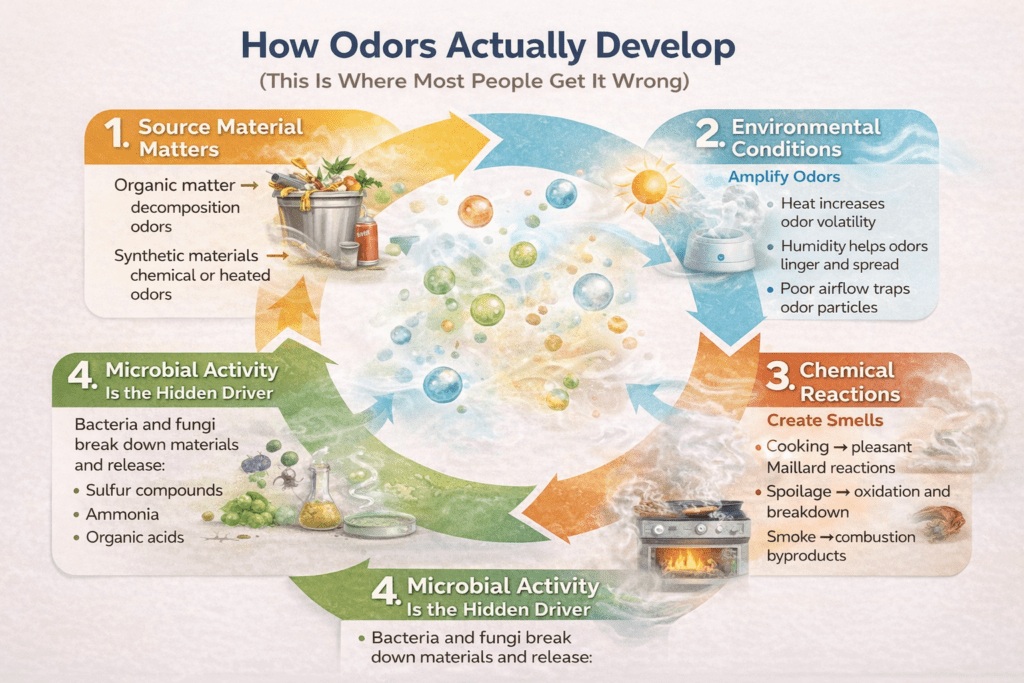
Why Odors Keep Coming Back
A Maryland property manager cleaned a rental unit multiple times after a tenant with pets moved out.
The smell? Still there.
Why?
The odor wasn’t on the surface—it had:
- Penetrated carpet padding
- Absorbed into subfloor materials
- Triggered bacterial breakdown
Only after professional odor remediation—targeting the source material and air simultaneously—was the odor fully eliminated.
That’s the difference between cleaning and solving the problem.
Common Odor Problems (And Why They’re Misunderstood)

Residential Odors
- Pet odors embedded in flooring
- Cooking grease buildup
- Mold and musty smells
The mistake: treating symptoms instead of the source
Commercial & Industrial Odors
- Large-scale airflow contamination
- Material-based odor retention
- Process-related emissions
These environments require customized odor control strategies, not one-size-fits-all solutions.
Also Read 📖The Hidden Cost of Odor Masking in Commercial Cleaning
Why “Masking” Odors Doesn’t Work
Air fresheners, sprays, and fragrances don’t remove odors.
They:
- Add competing scents
- Temporarily overwhelm your nose
- Leave the source untouched
“Masking an odor is like covering a warning light instead of fixing the engine.”
What Actually Eliminates Odors
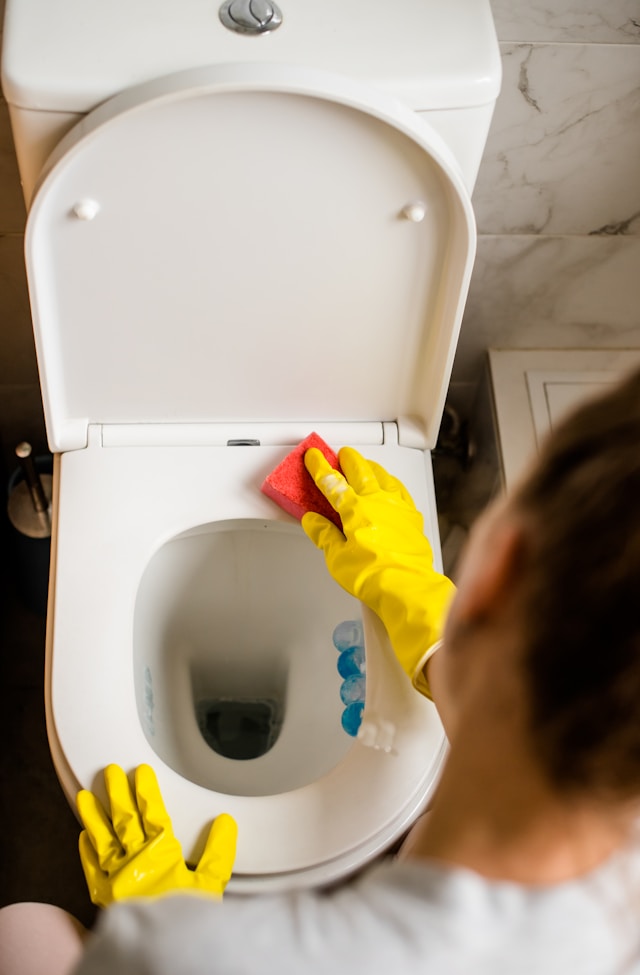
True odor removal requires:
- Identifying the source material
- Understanding how the odor is being produced
- Treating air, surfaces, and embedded materials
- Neutralizing odor molecules at a chemical level
This is where professional odor remediation stands apart.
Why Maryland OdorPros Takes a Different Approach
Maryland OdorPros focuses on source-level odor elimination, not temporary fixes.
Their Process Includes:
- Detailed odor assessment and identification
- Customized treatment strategies
- Advanced odor neutralization technologies
- Ongoing support for long-term results
They don’t just make spaces smell better—
they restore environments to a clean, usable condition.
Also Read 📖Why Maryland OdorPros Should be a Hotel’s First Call for Smelly Rooms
Why Odor Control Is Becoming More Important
Odor sensitivity is rising—and it’s not just personal preference.
Today’s homeowners, buyers, and tenants expect:
- Clean indoor air
- Odor-free environments
- Transparency in property condition
Odors now influence:
- Property value
- Rental turnover speed
- Business reputation
- Customer experience
In the near future, odor control will be seen as part of standard property quality—not an optional upgrade.
You Don’t Want a World Without Odors—You Want Control
Odors aren’t the enemy.
Uncontrolled, persistent, and hidden odors are.
The goal isn’t to eliminate smell entirely—it’s to:
- Remove harmful or unpleasant odor sources
- Restore air quality
- Create a space that feels clean, safe, and livable
“The difference between a clean space and a contaminated one is often something you can smell.”
Call to Action
If you’re dealing with odors that won’t go away, it’s time to stop masking and start solving.
Maryland OdorPros specializes in professional odor elimination that targets the source—not just the symptom.
👉 Schedule an odor assessment today and take control of your indoor environment.
FAQs
1. Can a home be completely odor-free?
No. Some odors are natural and necessary, but unwanted odors can be eliminated with proper treatment.
2. What causes odors in a home?
Odors are caused by airborne chemical compounds released from biological, chemical, or environmental processes.
3. Why do bad smells return after cleaning?
Because the source of the odor—often embedded in materials—was not fully removed.
4. Are odors harmful to health?
Some odors indicate harmful conditions like mold or poor air quality, but not all odors are dangerous.
5. What is the difference between odor removal and masking?
Removal eliminates the source, while masking only covers the smell temporarily.
6. How do professionals eliminate odors?
By identifying the source and using specialized treatments to neutralize odor molecules.
7. Can HVAC systems spread odors?
Yes, HVAC systems can distribute odor particles throughout a building.
8. Why are pet odors so difficult to remove?
Because they penetrate deep into materials like carpet, padding, and subflooring.
9. Does humidity affect odors?
Yes, higher humidity can intensify and prolong odors.
10. When should I call a professional odor service?
If odors persist, return after cleaning, or affect living or working conditions.