


The Move-Out Cleaning Trap: “It Looks Clean… So Why Does It Smell?”
Here’s the most annoying part about smoke odor in rentals: it can survive an absolutely heroic cleaning.
You can scrub kitchens until the grout fears you. You can shampoo carpet, wipe walls, run fans, open windows, burn a candle the size of a bowling ball—and the unit still has that stale smoke “ghost” hanging in the air.
That’s because smoke odor isn’t a “dirt problem.” It’s a materials problem.
Smoke is made of ultra-small particles and sticky chemical compounds that travel like airborne glitter (but way less fun). They don’t politely sit on the surface waiting for a mop. They penetrate, bond, and embed into building materials—especially in apartments where airflow and shared systems can spread odor farther than you expect.
Maryland OdorPros calls this exactly what it is: a job for odor remediation, not ordinary cleaning.
Also Read This Article Here: What are Odors & How Do They Develop?
Why Isn’t Cleaning Enough? The Science of “Stuck” Smoke Odor

Answer:
Smoke odor is persistent for two main reasons:
1) Smoke particles penetrate porous surfaces
In rentals, smoke odor commonly gets pulled into:
- Painted drywall and textured ceilings
- Subfloors beneath carpet or floating floors
- Wood cabinets and closet shelving
- Baseboards and door frames
- Insulation and wall cavities (especially around outlets and plumbing penetrations)
Once odor compounds are inside porous materials, surface cleaners can’t reach them. You can remove the grime film, but the odor source remains.
2) HVAC systems can store and redistribute odor
If the HVAC ran while smoking occurred (or if the tenant smoked near returns), odor compounds can settle into components and ductwork. Then, after you “finish cleaning,” the next cycle of heating or A/C can re-release that smell into the space.
That’s why the unit sometimes smells “fine” during the walkthrough… and then smells like an ashtray again two days later.
Maryland OdorPros explicitly addresses smoke odors that penetrate deep into walls, floors, and more—because that’s where the problem lives.
What is “Thirdhand Smoke” in Rentals? The Odor You Don’t See (But Tenants Do)
Answer: Thirdhand smoke—is the residue left behind after smoke settles on surfaces and materials.
In apartment turnovers, thirdhand smoke residue matters because it can:
-
Continue releasing odor over time (especially with humidity or heat)
-
Trigger immediate complaints from sensitive tenants
-
Create reputational risk in reviews (“It smelled like smoke even though it was ‘clean’”)
This isn’t about being dramatic. It’s about how smoke compounds behave in real buildings, with real HVAC cycles, real Maryland humidity, and real tenant expectations.
Why Do “Cover-Up” Methods Usually Backfire in Property Management?
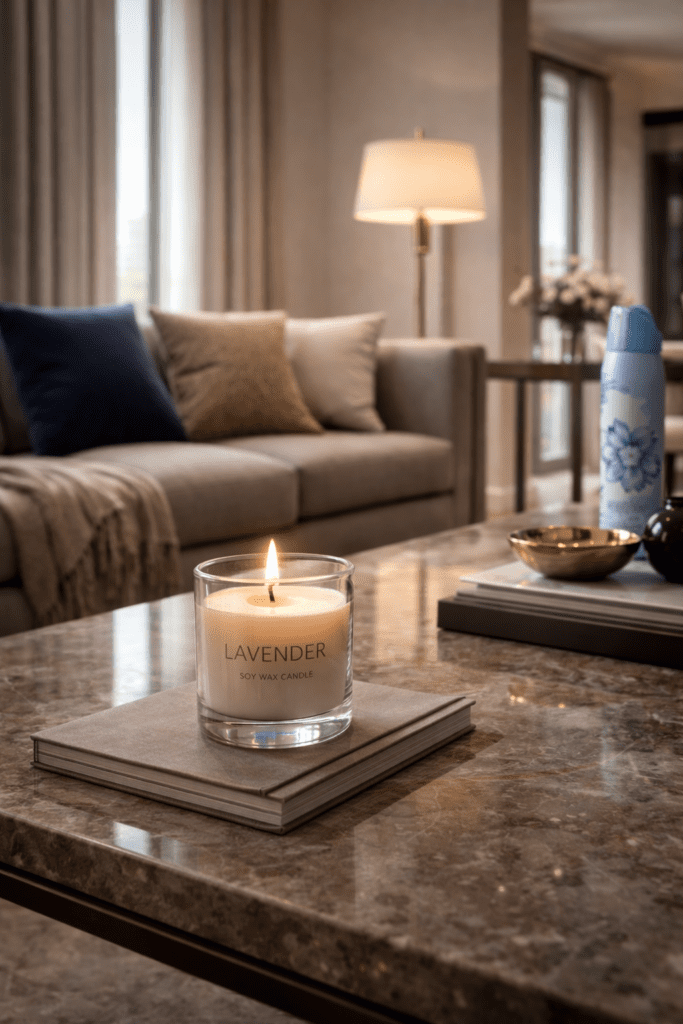
Answer: Because some well-meaning tactics make things worse:
Air fresheners and scented cleaners
They don’t remove odor; they add competing odor. Tenants read that as “they’re hiding something,” which is not the vibe you want on move-in day.
Ozone-only approaches (without source treatment)
Ozone can reduce odor in some situations, but if you don’t treat embedded sources, the smell can return. Also, ozone use has safety considerations and must be handled correctly—property teams should avoid DIY “set it and forget it” thinking.
Repainting without proper odor remediation
Paint can sometimes block odor temporarily, but it’s not a universal fix—especially if the odor source is in subfloors, HVAC, insulation, or cabinets. In those cases, repainting is like putting a new lid on a pot that’s still boiling.
Also Read This Article: Why are Fragrant Deodorizers the Wrong Way to Go?
What's The Real Cost of Lingering Smoke Odor? Vacancy Days and Double Work
Answer: Smoke odor problems in apartments and rentals tend to create a predictable (and expensive) loops which cost you down time:
- Tenant moves out
- Turnover cleaning happens
- Unit still smells
- Team tries extra cleaning / repainting / deodorizing
- Smell improves temporarily
- Humidity or HVAC brings it back
- Complaints, delays, rework, or concessions
Even if the remediation cost feels “extra,” the hidden costs usually show up faster:
- Extra vacancy days (your most expensive line item)
- Labor duplication (clean twice, paint twice, deodorize twice)
- Leasing friction (prospective tenants sense it immediately)
- Reputation damage (reviews move faster than maintenance tickets)
The goal isn’t perfection. The goal is rent-ready confidence: the unit smells neutral, stable, and safe to re-occupy.
What Does Professional Smoke Odor Remediation Looks Like? (Done the Adult Way)
Answer: Professional odor remediation is a multi-step process designed to eliminate odor at the molecular level and reduce the chance of rebound.
While the exact steps vary by severity, a best-practice approach includes:
1) Odor source mapping
A proper assessment identifies where smoke odor is concentrated: flooring, HVAC, wall cavities, closets, cabinetry, soft materials, and any airflow pathways.
2) Targeted treatment of porous surfaces
Professional-grade treatments are designed to penetrate and neutralize odor compounds—not just clean the surface film.
3) Airspace remediation
Smoke odor isn’t just “on things.” It’s in the air, cycling through the unit. Effective remediation treats the airspace and the spaces you can’t easily access.
4) HVAC odor control
If HVAC components or ducts are contaminated, they must be addressed—or they’ll keep re-contaminating your “clean” unit.
Maryland OdorPros positions this as comprehensive odor detection and removal, including smoke odors, with fast response and direct scheduling. marylandodorpros.com+1
Why Does This Matters More in 2026 Than It Did a Few Years Ago?

Answer: The trendline is not subtle: tenants are getting pickier, faster, and louder (hello, reviews).
Here’s what’s changing as we move through 2026:
Higher sensitivity and higher expectations
More tenants are aware of indoor air quality and odor as a health-and-comfort issue. Even when something is “technically clean,” odor signals risk.
Smoke-free policies are expanding
Many multifamily operators are tightening smoking policies. That increases the need for consistent, documented post-tenant odor remediation when violations happen.
Cannabis odor complaints are rising
Whether legal status is evolving or not, the practical reality is simple: cannabis odor behaves like smoke odor—sticky, persistent, and fast to trigger neighbor complaints.
Turnover speed is a competitive advantage
If two comparable properties exist, the one that can turn units faster without “odor surprises” wins on revenue and reputation.
Professional remediation becomes a future-proof operational tool: fewer surprises, fewer delays, better tenant experience.
Why Is Maryland OdorPros A Good Fit for Rentals, Apartments, and Property Managers?
Answer: For rentals, you need three things: speed, reliability, and results that hold after HVAC and humidity do their worst.
Maryland OdorPros emphasizes fast, personalized odor removal for smoke odors (and others) and provides direct contact for scheduling and consultation.
They also serve a broad Maryland footprint, including counties and cities commonly tied to multifamily and rental turnover needs—such as Annapolis, Anne Arundel County, Howard County, Baltimore, Carroll County, Prince George’s County, Montgomery County, Queen Anne’s County, Talbot County, and Ocean City.
Service types they cover (useful for portfolios)
OdorPros of Maryland describes odor removal across homes, autos, businesses, boats and RVs, which is helpful for property managers dealing with both units and tenant-related assets (like smoke-contaminated vehicles).
When Should You Call? The “Don’t Waste a Week” Rule
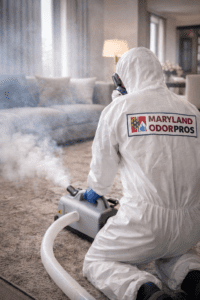
Answer: If the unit still smells like smoke after a proper turnover clean, don’t burn five more days trying random fixes.
A practical rule for rentals:
- If odor is noticeable on entry
- If odor increases when HVAC runs
- If closets or bedrooms hold the smell
- If humidity makes it worse
- If you’ve already cleaned and it persists
…it’s remediation time.
Maryland OdorPros offers direct contact and quick response scheduling by phone/text at 410.508.4109 and email info@marylandodorpros.com.
Conclusion: Cleaning Makes It Look Better—Remediation Makes It Rentable
Smoke odor in apartments and rentals isn’t a housekeeping issue. It’s the predictable outcome of smoke chemistry meeting porous building materials and HVAC airflow.
Standard cleaning can make a unit look pristine and still leave odor behind—because the odor is coming from inside walls, floors, ducts, and absorbed materials. That’s why “more cleaning” often becomes an expensive treadmill.
Professional smoke odor remediation is what breaks the cycle: eliminate the source, stabilize the result, protect leasing timelines, and reduce tenant complaints.
For Maryland property managers and rental owners who want units that pass the nose test the first time, Maryland OdorPros is built for exactly this moment—fast response, professional odor removal, and practical results that hold up after move-in day.
Contact: 410.508.4109 (call or text) | info@marylandodorpros.com
Learn more: https://marylandodorpros.com/ | Smoke Odor Services: https://marylandodorpros.com/smoke-odor-removal/
FAQ

1. Why does smoke odor remain after move-out cleaning?
Because smoke compounds absorb into porous materials and HVAC systems, and surface cleaning can’t neutralize embedded odor molecules.
2. Can painting remove cigarette smoke smell in an apartment?
Painting may block some odor temporarily, but it won’t remove odor sources in subfloors, ducts, insulation, or cabinets.
3. Why does smoke odor come back when the AC turns on?
HVAC airflow can re-circulate trapped smoke compounds from returns, ducts, coils, and contaminated interior surfaces.
4. Is cannabis odor treated the same way as cigarette smoke odor?
Similar principles apply—odor compounds can embed in porous materials and often require professional remediation for lasting removal.
5. How do I know if smoke odor is in the walls or floors?
If odor is strongest in closets, bedrooms, or near baseboards—and returns after cleaning—embedded sources are likely.
6. Will air fresheners or odor bombs solve smoke odor in rentals?
They usually mask odor briefly and can reduce tenant trust; they don’t remove the underlying odor source.
7. What areas of an apartment hold smoke odor the longest?
Drywall/paint films, ceilings, subfloors, HVAC components, cabinets, and soft finishes tend to retain smoke odor.
8. How long does professional smoke odor remediation take?
Many projects can be completed quickly, but timing depends on severity, unit size, and whether HVAC/subfloor treatment is needed.
9. Should remediation happen before or after turnover cleaning?
Often it’s best to assess early; remediation can be coordinated with cleaning/painting so you don’t redo work.
10. Who should property managers call for smoke odor removal in Maryland?
A professional odor remediation company like Maryland OdorPros that treats odor at the source and addresses HVAC and porous materials.