


Bringing home a new puppy or kitten is pure optimism wrapped in fur. Tiny paws. Big eyes. Unlimited chaos.
What most new pet owners don’t anticipate is how quickly odor can take hold inside a home. Pet odor is not just about accidents. It’s about absorption, chemistry, and time. The earlier you act, the easier it is to maintain a fresh, healthy indoor environment.
This guide is designed for Maryland homeowners preparing for a new pet — or those who just welcomed one — and want to prevent odor before it becomes embedded in flooring, subfloors, furniture, or HVAC systems.
Maryland OdorPros specializes in professional odor elimination and preventive treatments throughout Maryland. Prevention is always more efficient than remediation, and understanding the science behind odor gives homeowners a powerful advantage.
Why Do Pet Odors Become Permanent So Quickly?
Pet odor becomes persistent when organic waste penetrates porous materials.
Urine, for example, contains urea, uric acid crystals, bacteria, and proteins. As bacteria metabolize these compounds, they release ammonia and other volatile organic compounds (VOCs). These VOCs are what we perceive as “pet smell.”
Here is the problem:
Uric acid crystals bind tightly to porous surfaces like:
- Carpet fibers
- Carpet padding
- Hardwood seams
- Grout lines
- Subfloor materials
- Upholstered furniture
If moisture returns (humidity spikes, steam cleaning, spills), those crystals can reactivate and release odor again. This is why homeowners often say, “It smelled fine until summer.”
Odor prevention must focus on stopping absorption before it happens.
Pre-Pet Preparation: Protect the Vulnerable Zones
Before your pet even steps inside, you can dramatically reduce future odor risk.
Apply Protective Surface Coatings
Modern floor sealants and textile protectants create hydrophobic barriers that slow absorption.
Recommended areas:
- Hardwood floors (especially seams)
- Luxury vinyl plank edges
- Grout lines
- Area rugs
- Upholstery fabrics
Professional-grade sealants outperform retail sprays because they penetrate and bond to surfaces at a molecular level.
Maryland OdorPros offers preventive odor-barrier treatments that help reduce absorption into porous materials — particularly valuable in homes with young pets in training.
Upgrade Entryway Containment
New pets explore before they understand rules.
Create controlled zones:
- Washable, waterproof mats
- Crate areas with sealed flooring
- Pet playpens on non-porous surfaces
- Easily sanitized litter box stations
Avoid placing litter boxes directly on unsealed hardwood or carpet. Even microscopic litter dust carries odor-producing bacteria.
If you are renovating or moving, flooring choice matters.
Lowest odor retention risk:
- Sealed tile
- Properly sealed concrete
- Fully sealed hardwood
- High-quality luxury vinyl
Highest odor retention risk:
- Wall-to-wall carpet with padding
- Unsealed hardwood
- Worn laminate seams
Prevention begins with material science.
Behavioral Training That Reduces Odor Risk
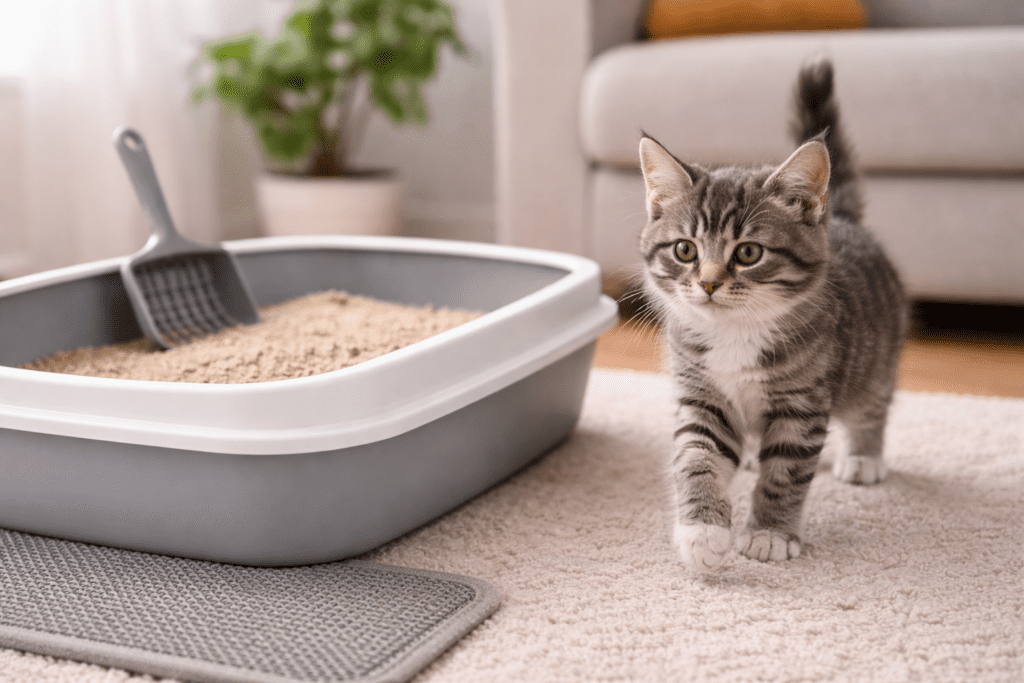
Odor control is not just cleaning — it is conditioning.
Establish Bathroom Routine Immediately
Puppies thrive on consistency. Frequent outdoor breaks reduce accident probability.
General guideline:
- Every 1–2 hours for young puppies
- Immediately after eating
- Immediately after waking
- After play sessions
For kittens, litter training begins with proper placement:
- Quiet, low-traffic areas
- Away from food
- One box per cat plus one extra
Consistency reduces indoor contamination events dramatically.
Reward Early, Correct Gently
Punishment increases anxiety, and anxious pets are more likely to mark territory.
Positive reinforcement training reduces stress-driven urination behaviors.
Territorial marking is one of the most persistent odor sources in adult pets. Early training lowers that risk.
Spay and Neuter Timing Matters
Intact animals are more likely to mark territory with high-concentration urine.
While veterinary decisions are individual, behavioral science consistently shows sterilization reduces marking behavior in many pets.
Less marking equals less odor infiltration.
Cleaning Strategies That Prevent Deep Odor Penetration
Speed is everything.
Blot — Don’t Scrub
Scrubbing pushes urine deeper into fibers and padding.
Instead:
-
Blot immediately with absorbent material.
-
Apply enzymatic cleaner.
-
Allow full dwell time (often 10–15 minutes minimum).
-
Blot again.
Enzymatic cleaners break down organic molecules rather than masking odor.
Avoid ammonia-based cleaners. They mimic urine scent and can encourage repeat marking.
Use Enzymatic Cleaners Correctly
Most homeowners under-apply product.
The enzyme solution must reach as deep as the contamination. That often means saturating the affected area fully.
Insufficient treatment leaves uric acid crystals behind — the primary cause of odor recurrence.
Control Humidity in Maryland’s Climate
Maryland summers are humid.
Humidity reactivates odor molecules.
Ideal indoor humidity:
40%–50%
Use:
- Dehumidifiers in basements
- HVAC humidity control
- Bathroom exhaust fans
Odor control is environmental control.
Grooming and Routine Hygiene
Pet odor does not originate solely from accidents.
Regular Grooming Reduces Ambient Odor
Dander and skin oils accumulate in fabrics and air systems.
Routine:
- Weekly brushing
- Regular bathing (per breed guidelines)
- Paw wiping after outdoor time
Outdoor bacteria become indoor odor contributors.
Wash Pet Bedding Weekly
Pet beds are microbial reservoirs.
Wash in hot water when fabric allows. Dry thoroughly.
Moist bedding equals bacterial growth equals odor amplification.
Clean HVAC Filters More Frequently
Dander and odor particles circulate through ventilation systems.
Replace filters every 1–3 months in homes with new pets.
High-efficiency filters improve odor containment.
When Professional Prevention Is Worth It
There is a tipping point where preventive treatment becomes a smart investment.
Professional odor prevention services can:
- Seal subfloors before accidents penetrate
- Apply antimicrobial treatments
- Neutralize residual organic compounds
- Treat areas invisible to homeowners (under baseboards, inside seams)
Maryland OdorPros uses professional-grade odor neutralization technology designed not to mask odors, but to chemically neutralize odor-causing compounds.
For new pet owners, scheduling a preventive consultation is far less costly than replacing carpet or subfloor later.
2026 Trends in Pet Odor Prevention
The pet industry is evolving rapidly.
Emerging innovations include:
- Odor-resistant textile coatings
- Antimicrobial flooring materials
- Smart litter systems with ammonia sensors
- Low-VOC enzymatic solutions
- Professional hydroxyl and chlorine dioxide treatments for preventive deodorization
Consumer expectations in 2026 are shifting toward proactive home health management. Indoor air quality is now part of overall wellness strategy.
Preventing pet odor is no longer cosmetic. It is environmental hygiene.
Conclusion: Prevention Is Easier Than Remediation
Once pet odor penetrates subflooring or wall cavities, remediation becomes invasive and expensive.
New pet owners have a rare advantage: timing.
By combining:
- Early behavioral conditioning
- Protective surface treatments
- Proper cleaning science
- Environmental humidity control
- Professional preventive consultation
You can maintain a home that smells clean — not covered up — but genuinely odor-free.
Maryland OdorPros helps homeowners across Maryland eliminate and prevent persistent odors using advanced, science-based odor control solutions.
The best time to stop pet odor is before it starts.