

The Hidden Science of Odor: Why Some Smells Stick (and How to Break the Molecule Chains)
Persistent odors don’t linger because a space is “dirty”—they linger because odor molecules bind to surfaces at the molecular level. Understanding how volatile organic compounds interact with materials explains why masking fails and why oxidation-based treatments can permanently eliminate odors.
Why Odors Aren’t Just “Smells” — They’re Chemistry
When a home or business smells bad, most people reach for air fresheners, candles, or sprays. The problem is simple: odor is not an abstract concept. It is chemistry in motion.
What we perceive as “odor” is typically caused by volatile organic compounds (VOCs)—small, carbon-based molecules that easily evaporate into the air. These molecules are light enough to travel, reactive enough to bind to surfaces, and stubborn enough to linger long after the original source is gone.
Your nose isn’t detecting “a smell.” It’s detecting specific molecular structures interacting with olfactory receptors. If those molecules remain intact, the odor remains—no matter how much fragrance you add on top.
Why Some Smells Refuse to Leave

Certain odors persist because of how they interact with the built environment.
Most homes and commercial spaces are filled with porous and semi-porous materials:
- Carpets and padding
- Upholstery and mattresses
- Drywall and insulation
- Wood framing and subfloors
- HVAC ductwork and filters
Odor molecules don’t just float in the air. They adsorb (bind to the surface of materials) and sometimes absorb (penetrate into the material itself). Once embedded, they slowly re-release back into the air—especially when humidity or temperature rises.
This is why a room may smell fine in winter but become unbearable in summer. Heat and moisture act like molecular wake-up calls.
Also Read 👉🏼Pet Odors in Rental Properties: How Can You Protect Value and Indoor Air Quality?
Masking vs. Neutralizing: Why Air Fresheners Fail
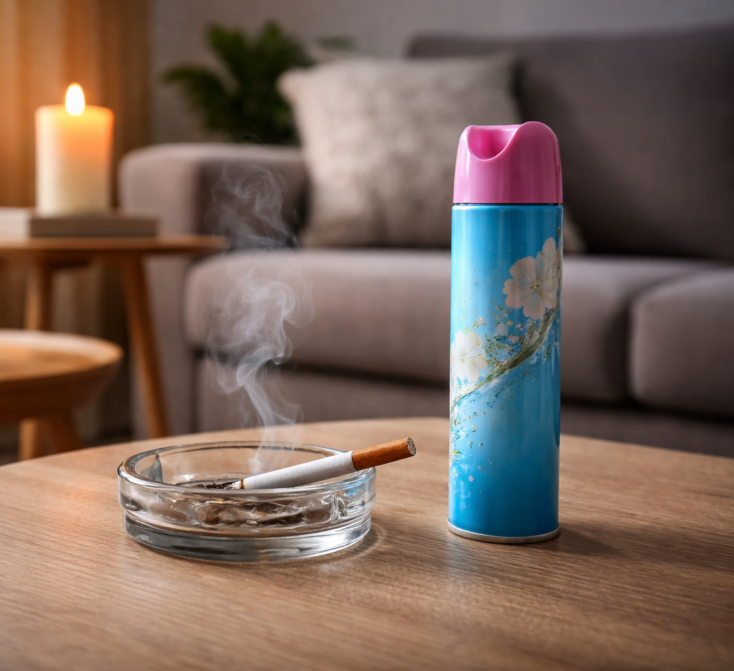
Most consumer odor products work by masking, not removing.
They introduce stronger or more pleasant-smelling VOCs to overwhelm your nose. The original odor molecules are still present. They’re just temporarily drowned out.
When the fragrance dissipates, the odor returns. Sometimes worse, because now you have two competing chemical signatures lingering in the same space.
This is also why “deep cleaning” alone often fails. Cleaning removes visible residue, but odor-causing molecules remain chemically intact, bonded to materials at a level ordinary cleaners can’t reach.
The Real Solution: Breaking the Molecule Itself
Permanent odor removal requires one thing: chemical change.
This is where oxidation comes in.
Oxidation-based treatments work by introducing an oxidizing agent that reacts with odor molecules and breaks their chemical bonds. Once the molecular structure changes, the compound can no longer interact with your nose in the same way. The odor doesn’t get covered—it gets destroyed.
One of the most effective and controllable oxidation tools used in professional odor remediation is chlorine dioxide (ClO₂).
Unlike fragrances or absorbers, chlorine dioxide reacts directly with sulfur compounds, amines, phenols, and other common odor-causing VOCs—fragmenting them into non-odorous byproducts. The result is true neutralization, not camouflage.
Why This Matters in Maryland Homes and Businesses

Maryland has a unique odor profile thanks to climate, building styles, and land use.
High humidity throughout much of the year accelerates odor adsorption and re-release. Basements and crawl spaces—common in Maryland homes—act like odor reservoirs.
Some of the most common odor issues we see across Maryland include:
- Musty and mold-associated odors from basements, crawl spaces, and older foundations
- Pet urine and dander odors deeply embedded in flooring and subfloors
- Smoke odors from cigarettes, cooking, fireplaces, or prior occupants
- Food and grease odors in restaurants, commercial kitchens, and multi-tenant buildings
- Biological odors in healthcare, assisted living, and multi-use commercial spaces
- Water intrusion odors following leaks, flooding, or chronic moisture issues
In all of these cases, the visible source may be gone—but the odor molecules remain, bonded to materials and quietly reactivating under the right conditions.
Also Read 👉🏼The Psychology of Smell: How Home Odors Affect Mood & Behavior
Why Professional Treatment Makes the Difference
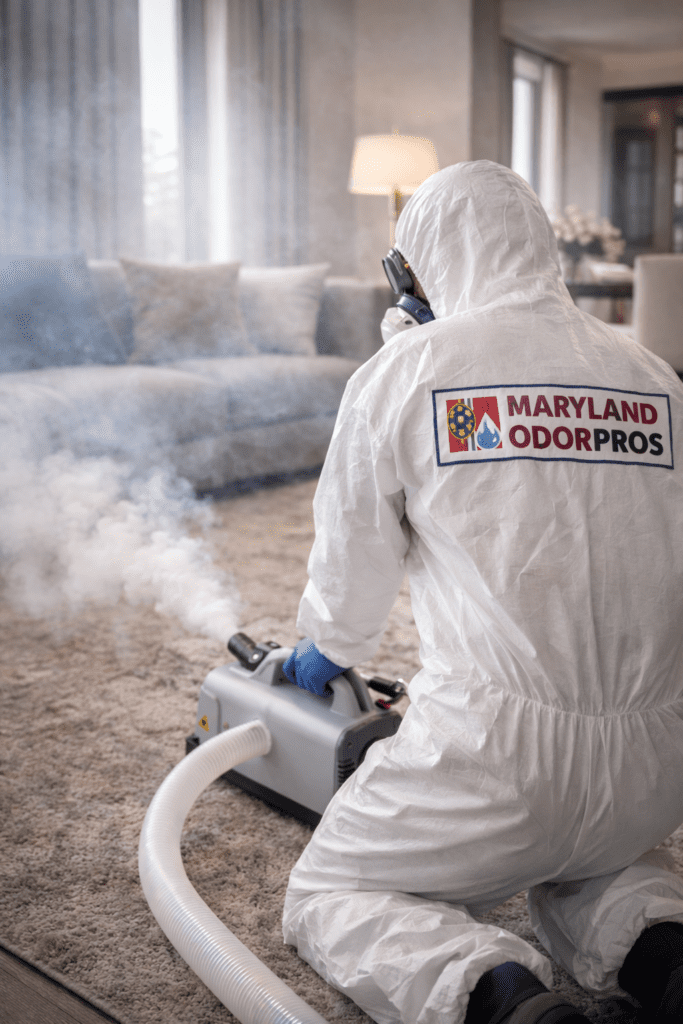
True odor remediation requires:
- Understanding which molecules are present
- Knowing where they are bound
- Applying the correct oxidation method at controlled concentrations
- Ensuring the treatment reaches hidden reservoirs, not just open air
Professional odor removal isn’t about overpowering smells—it’s about molecular housekeeping. Done correctly, the odor doesn’t “fade.” It stops existing in its original form.
The Takeaway: Odors Persist Because Molecules Persist
If a smell keeps coming back, it’s not your imagination—and it’s not because you haven’t cleaned hard enough.
It’s because odor molecules are still chemically intact, bonded to your environment.
Break the molecule, and you break the problem.
That’s the science behind real odor elimination—and why education matters just as much as equipment when solving persistent odor issues in Maryland homes and businesses.
(FAQS)
-
Why does my house still smell after cleaning?
Cleaning removes residue, not odor molecules. If VOCs remain chemically intact and bonded to surfaces, the smell will return. -
What are VOCs and why do they smell?
Volatile organic compounds are small molecules that easily evaporate and interact with olfactory receptors, creating odor perception. -
Why do musty smells get worse in summer?
Heat and humidity cause odor molecules to re-release from porous materials back into the air. -
Do air fresheners actually remove odors?
No. They mask odors by adding competing fragrances without altering the original odor molecules. -
What makes pet urine odor so hard to remove?
Urine contains nitrogen-based compounds that bind deeply into flooring and subfloors and re-activate with moisture. -
Is odor a sign of mold?
Not always, but persistent musty odors often indicate moisture-related microbial activity or trapped organic compounds. -
How does oxidation remove odors?
Oxidation chemically alters odor molecules so they no longer produce a smell. -
Is chlorine dioxide safe when used professionally?
Yes. When applied correctly by trained professionals, it is effective and controlled for odor remediation. -
Can odors live in walls and HVAC systems?
Yes. Porous materials and ductwork are common reservoirs for odor molecules. -
Why do odors return after renovations or painting?
Construction can disturb embedded odor reservoirs, releasing previously trapped molecules back into the air.